A Year of Practical Wonder
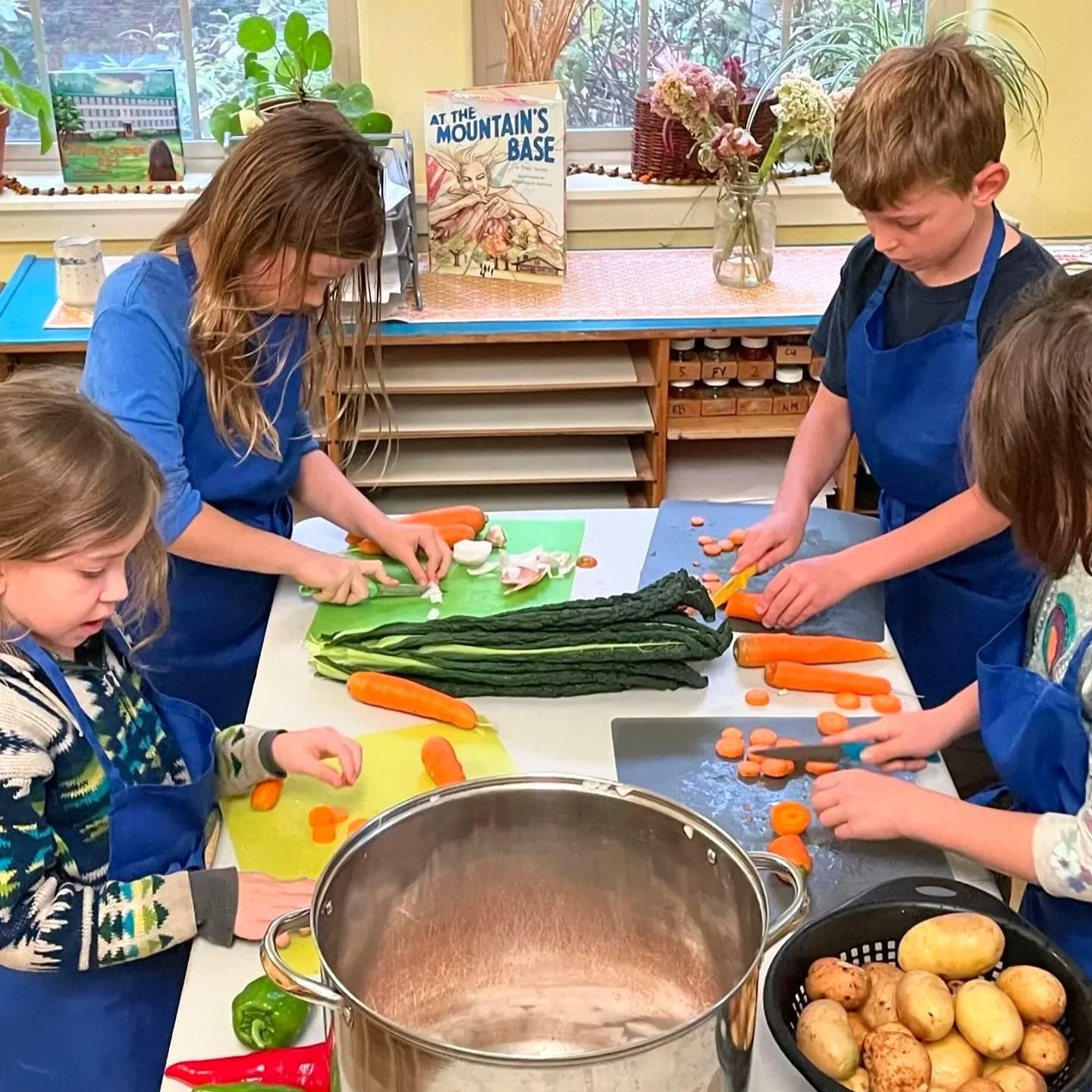
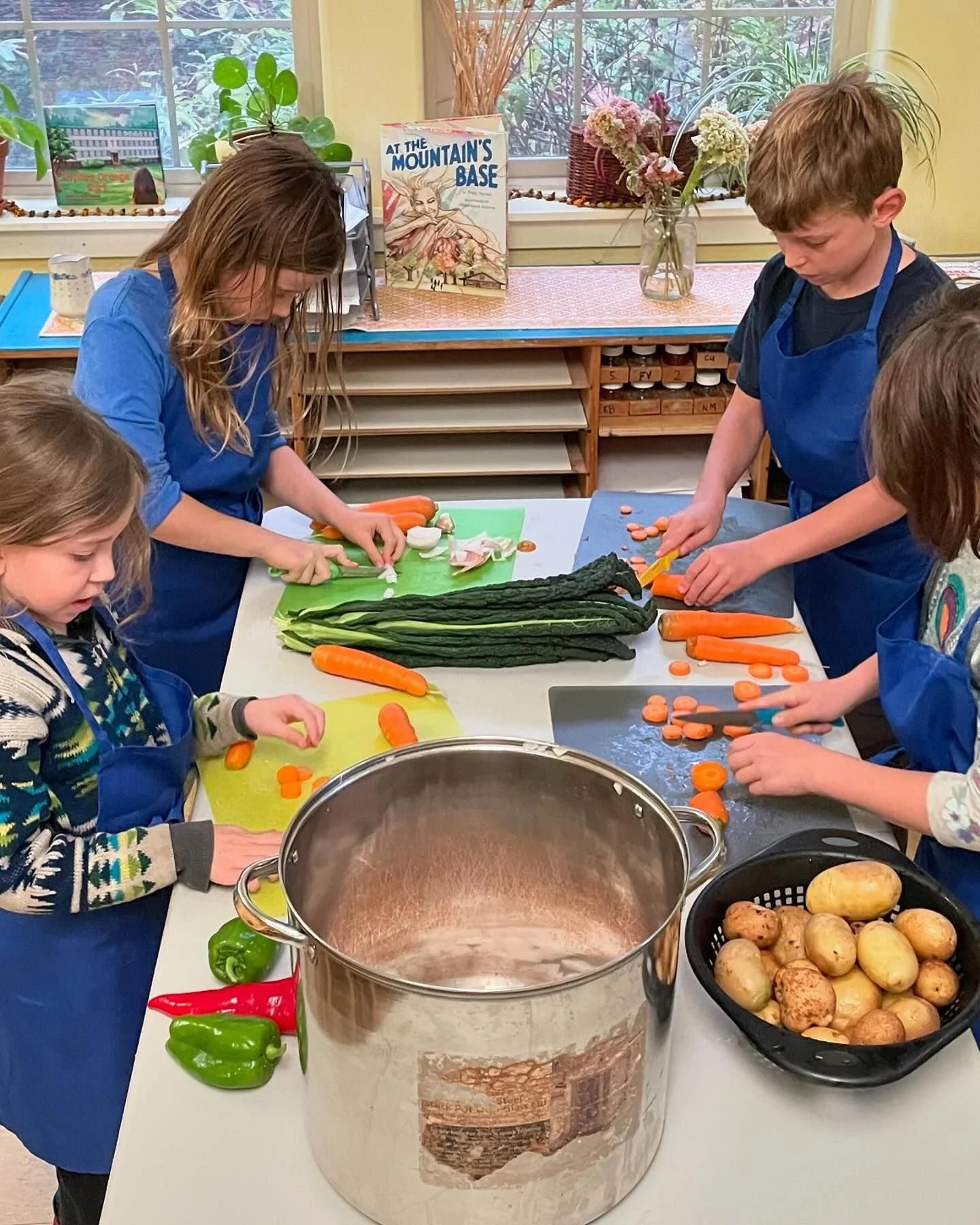
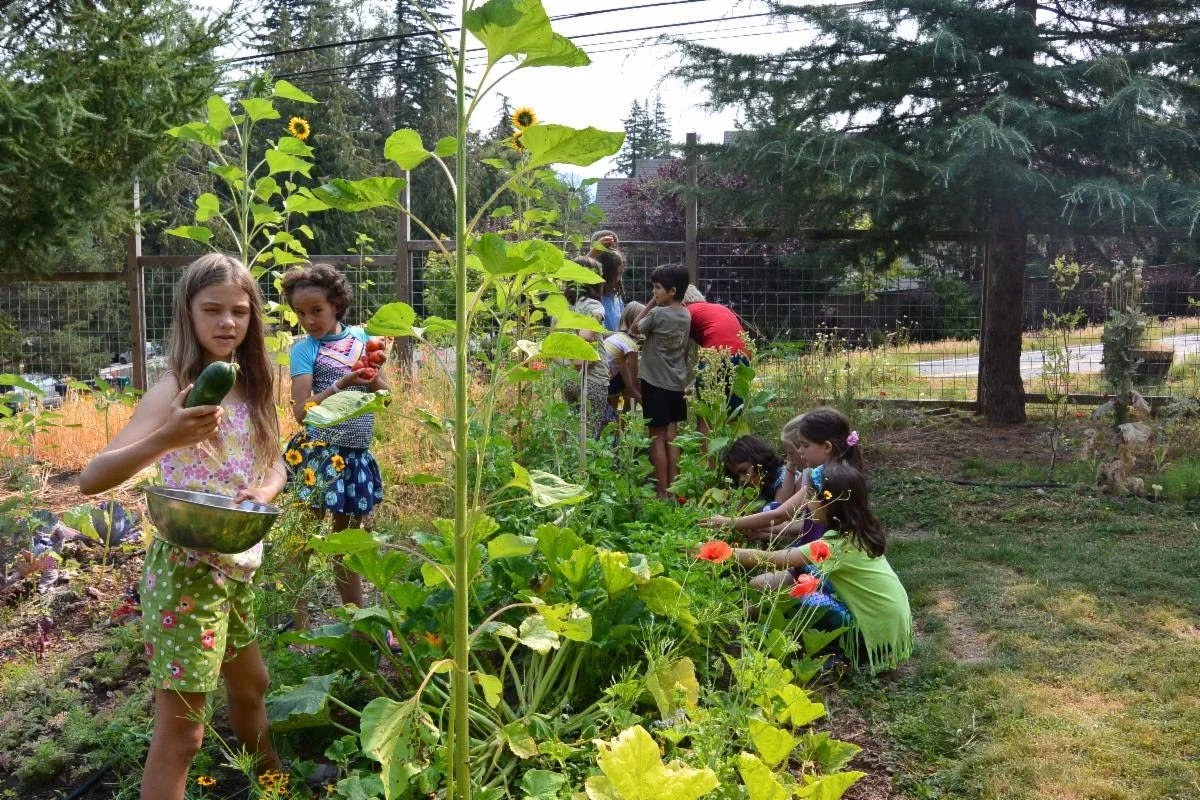
In Third Grade, children begin to feel themselves growing apart from the magical oneness of early childhood, becoming separate individuals with a renewed curiosity about the world around them. We meet this developmental shift with a curriculum rich in world creation stories and the practical, hands-on aspects of human life — farming, gardening, cooking, baking, and building. Students travel to working farms to plant, harvest, and care for animals, and tend their own school garden; in the classroom kitchen, they cook a diverse menu of foods from around the world, often using ingredients they've grown or harvested themselves, bringing math to life through real-world measurement of length, weight, volume, and time.
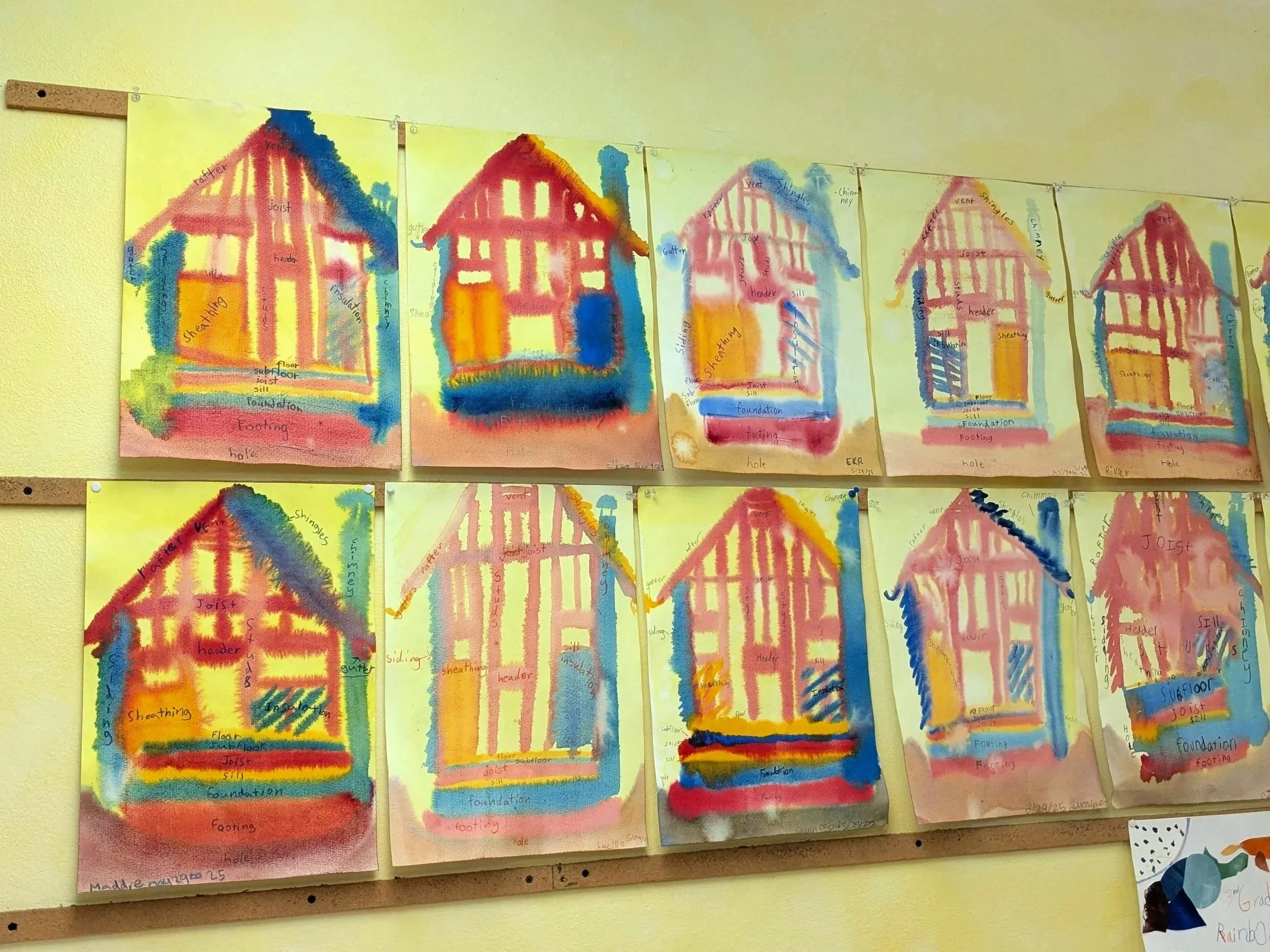
This hands-on learning extends into shelter projects, where students research and build model dwellings from past and present cultures, exploring indigenous materials from around the world as well as carpentry and linear measurement. Language arts grows alongside this work through the continuation of cursive writing, grammar study, and the first written research reports, in addition to skip counting and "shopkeeper" activities that introduce the history and practical use of money.
Together, these experiences help third graders deepen their understanding of how people live, work, create, and connect across time and place.
Third Grade Curriculum
-
Language Arts: Cursive writing, parts of speech, dictation, paragraph structure and compositions, journaling, reading, punctuation and oral recitation
History and Geography: Creation stories, Old Testament/Hebrew stories, life rhythms (farming, shelter, food production, textiles, building techniques), landscapes, climates and natural resources
Mathematics: Measurement (volume, length, weight, time, money), introduction of vertical multiplication and long division, number patterns and mental math
Science / Nature Study: Agriculture and farming, animal husbandry, plant life from seed to textile, Coast Salish weaving and basket making, cooking and baking
-
World Languages: Spanish and American Sign Language
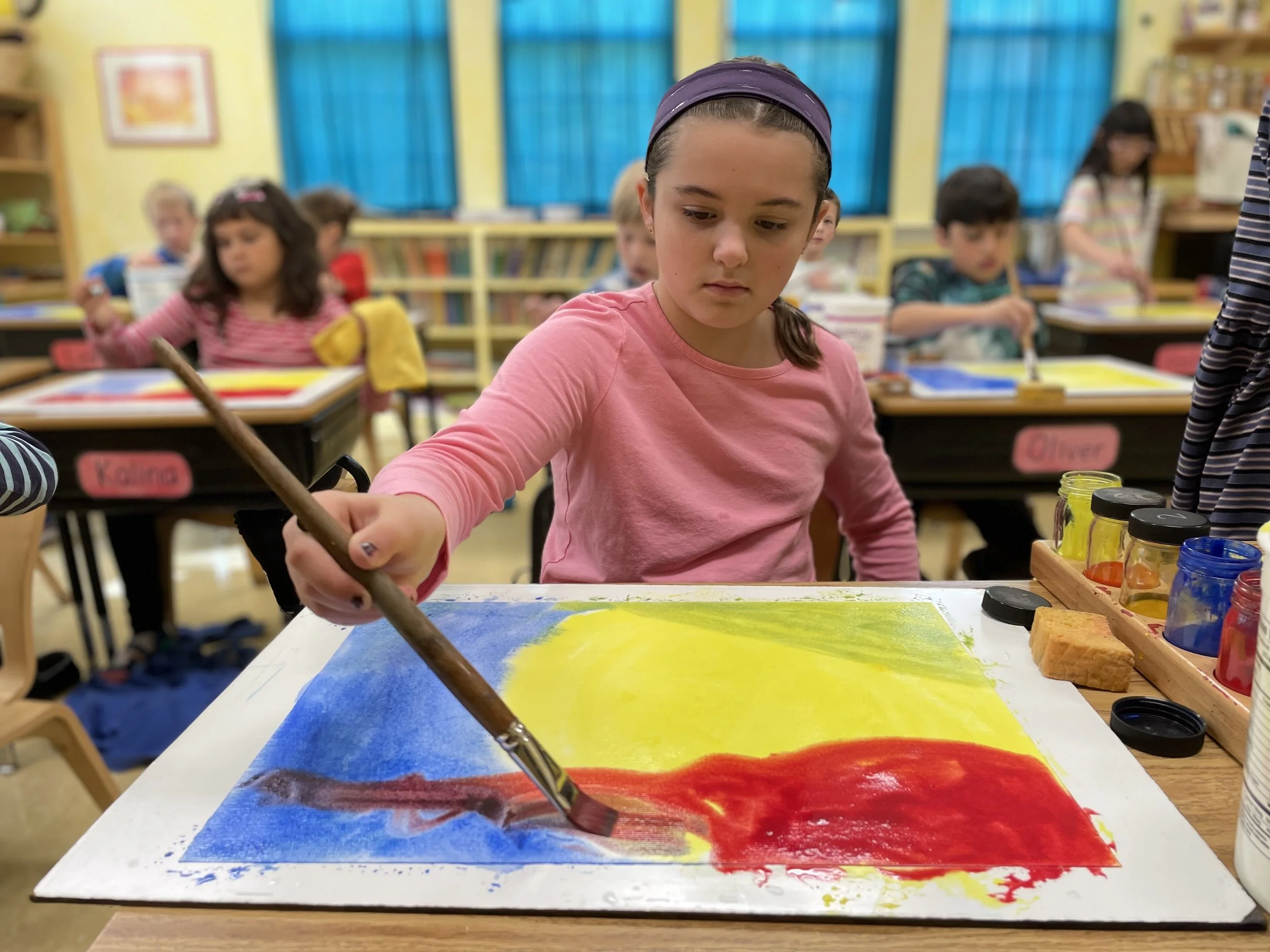
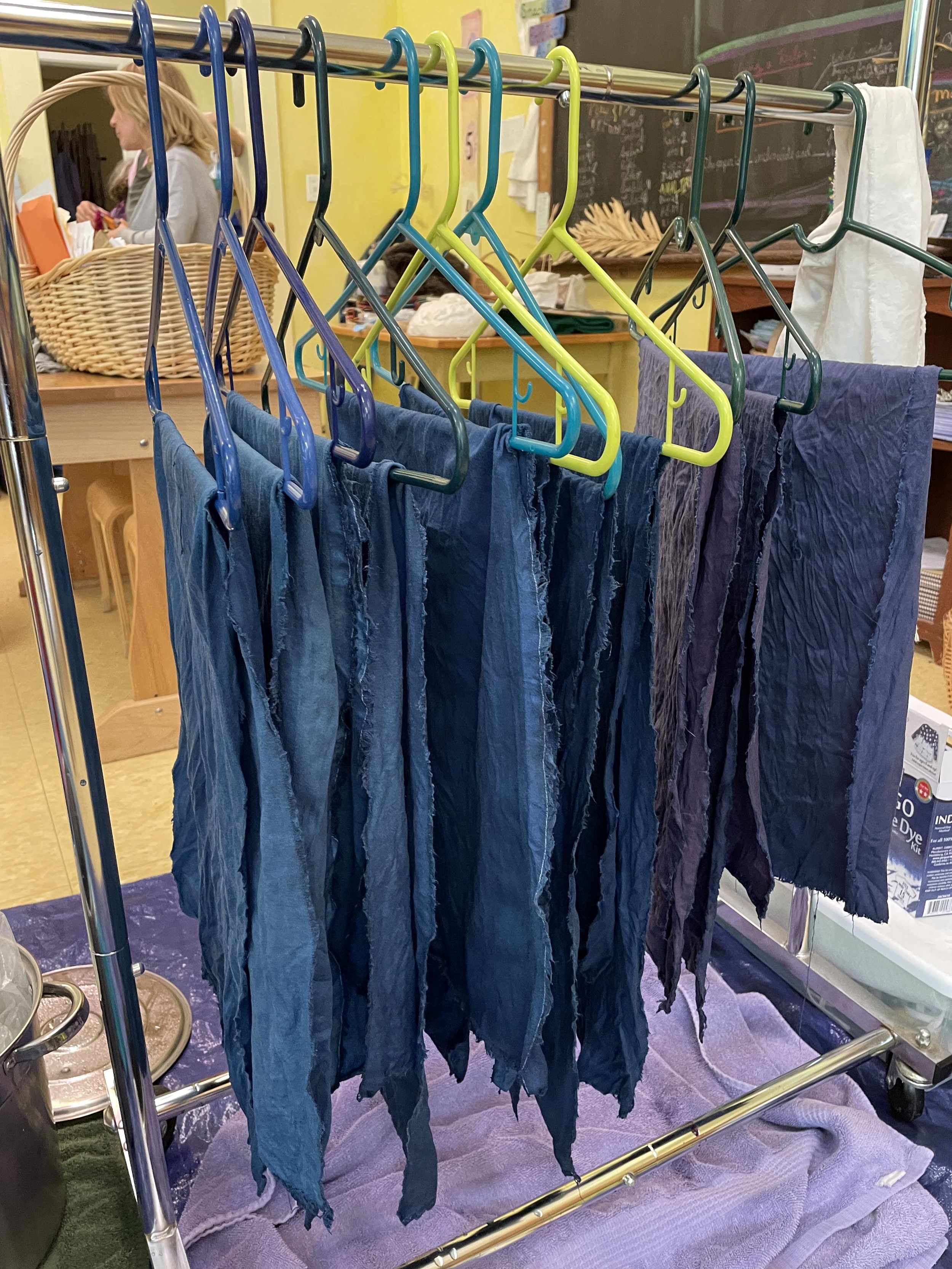
Fine & Practical Arts: Painting, drawing, beeswax modeling, crocheting (hats and bags), fiber arts (textile dyeing, carding and spinning wool), and gardening
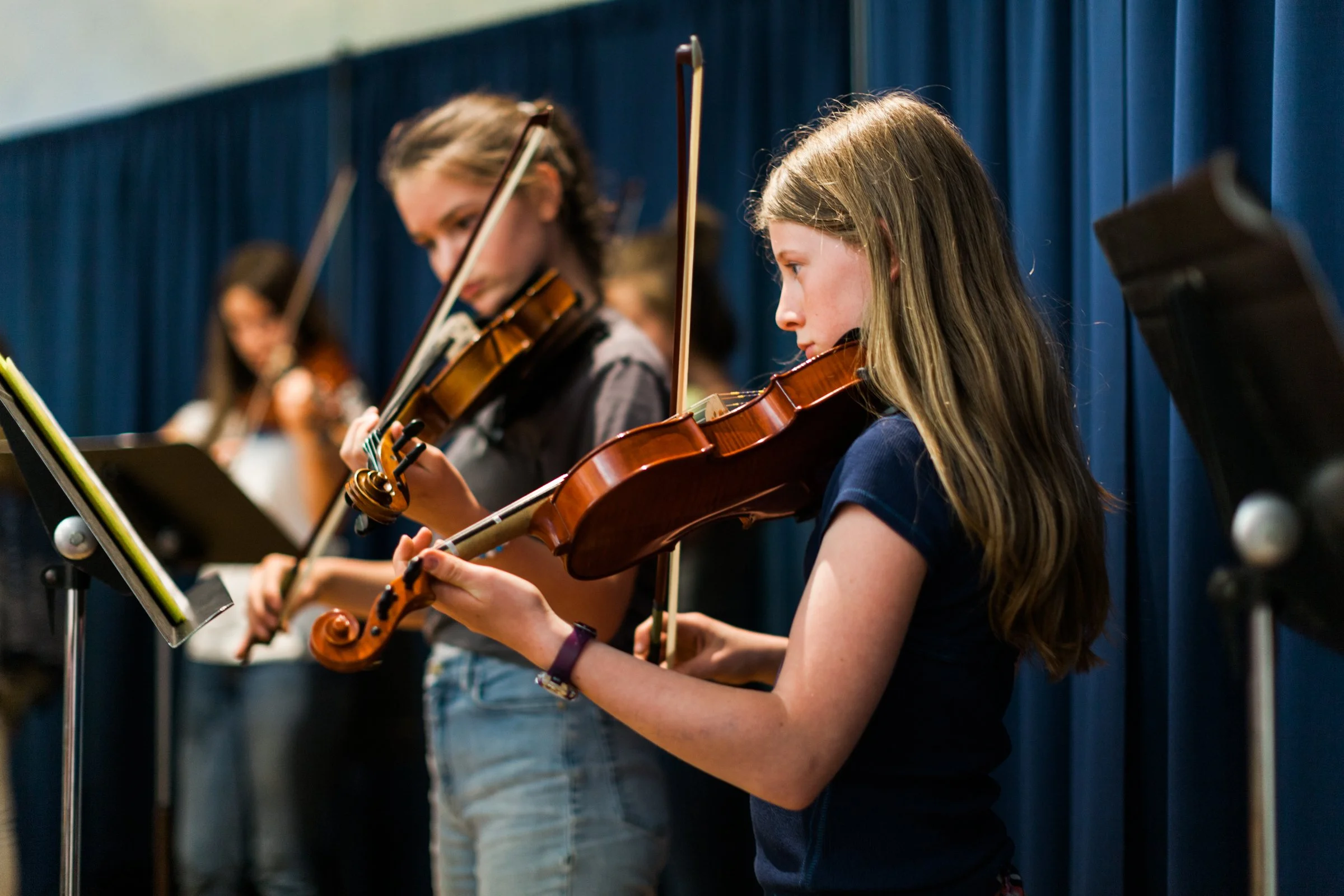
Music: Diatonic flute, singing, formal music classes begin (general music studies and notation)
Movement: More complex cooperative and imaginative games inspired by the Grade 3 curriculum, clapping and partner games, jump rope, ball skills, string games, folk dances, tumbling, and parachute play
Eurythmy
-
Regional Event: Plough Days at Sunfield Biodynamic Farm & Waldorf School
Field Trips: Sheep shearing, visits to local farms and construction sites, and an overnight visit to Happy Valley Farm on Whidbey Island
Shelter Project: Research and build a model dwelling
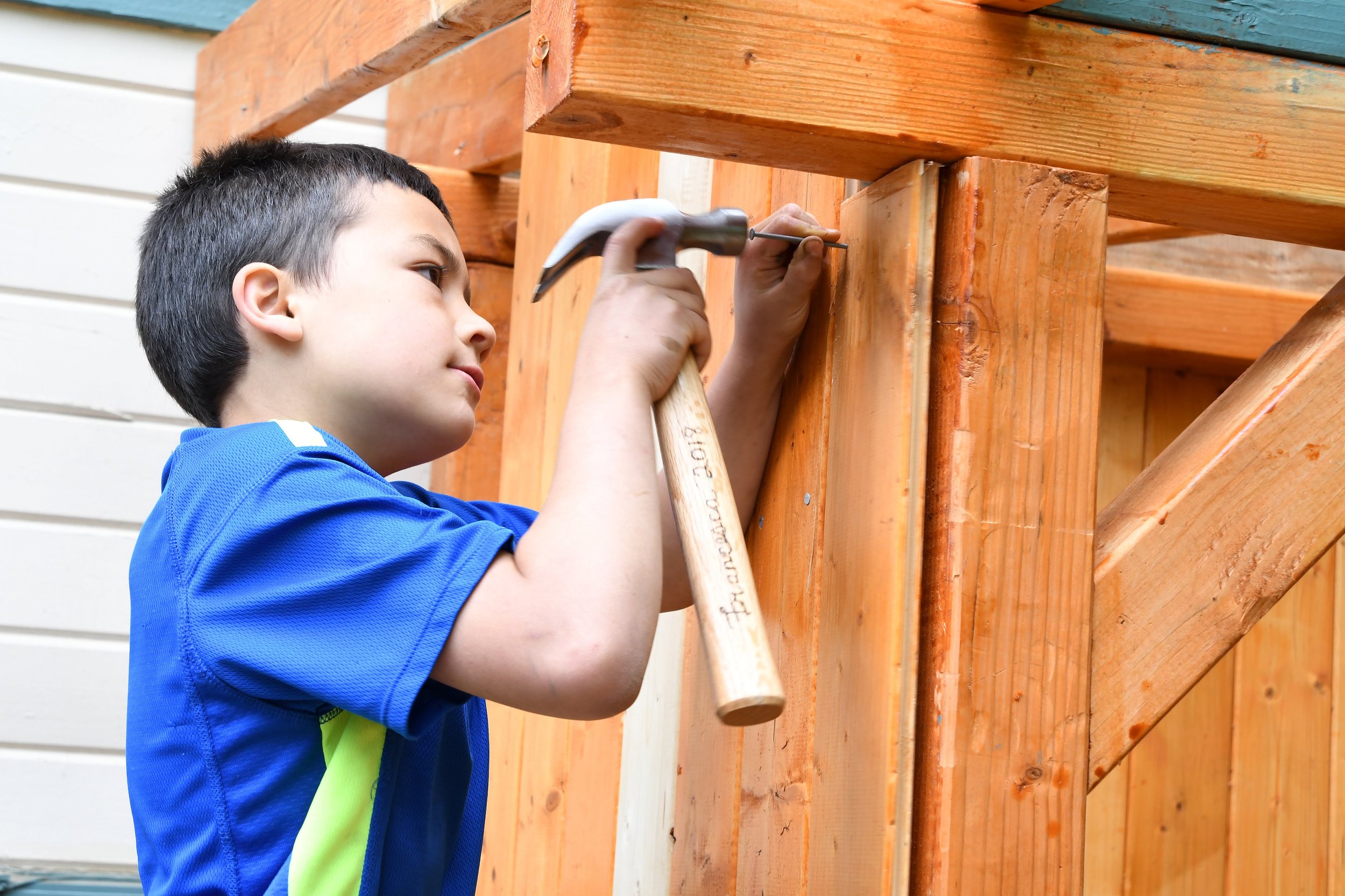
Construction Project: Students and families work together to build something for our campus, such as a play structure, garden bed, benches or other offering
Sample Daily Schedule
8:30am - Main Lesson
10:30am - Snack & Recess
11:00am - Gardening
11:45am - Fiber Arts
12:30pm - Lunch & Recess
1:15pm - ASL
2:00pm - Music
3:00pm - Close
Early release Fridays at 1:15pm
Third Grade Highlights
Practical Math
Plough Days
Cursive Writing
Shelter Projects
Practical Math
Practical Math
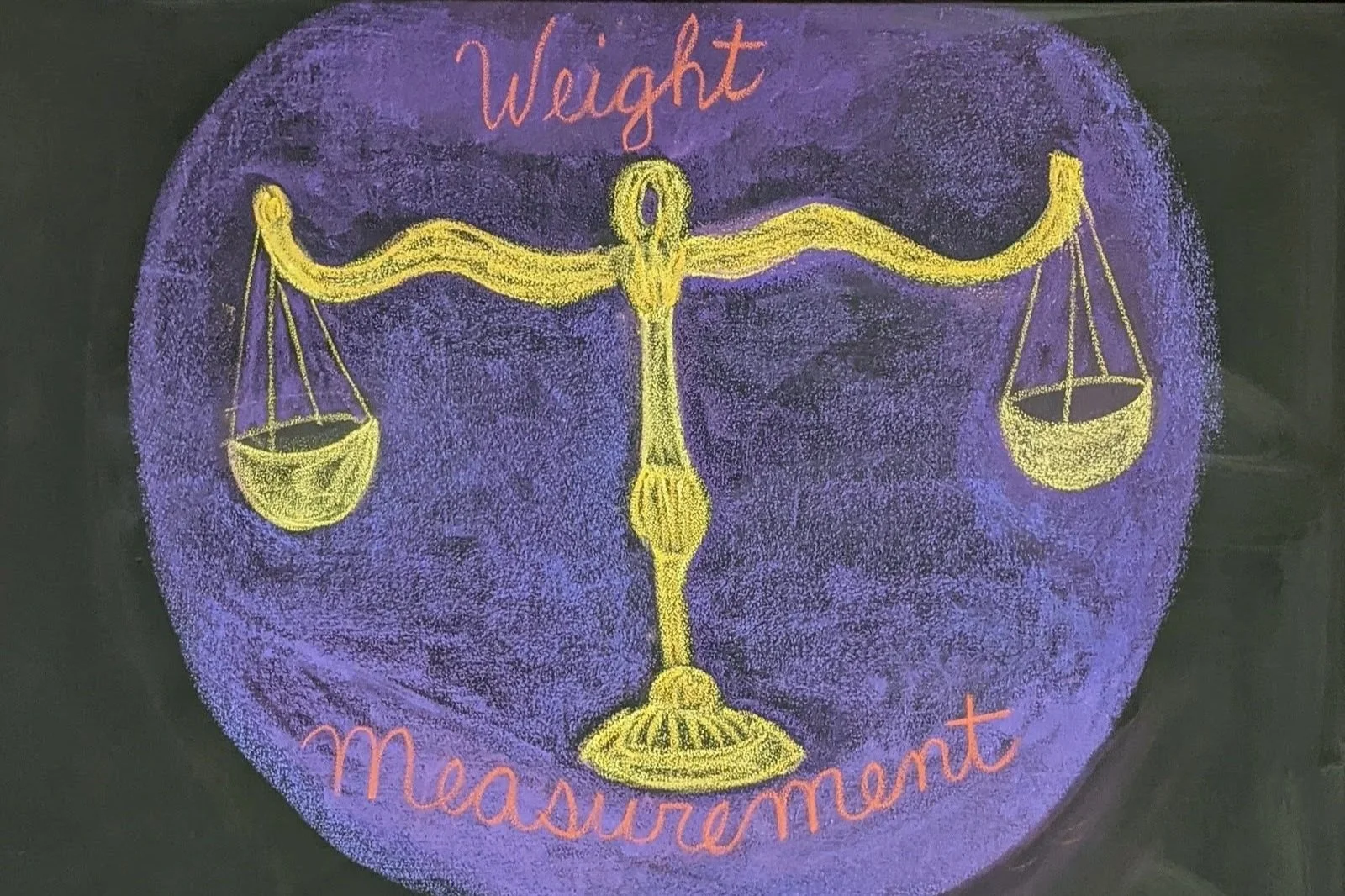
In third grade, math comes alive in the garden and the classroom kitchen. Students measure ingredients for yummy recipes (like soup, applesauce, pies, cookies, bread, and even fresh pasta) and weigh what they harvest from the school garden, learning length, weight, volume, and time through real, hands-on work. When they build model dwellings, linear measurement and carpentry become real tools for real projects.
In "shopkeeper" activities, children buy, sell, barter and make change, discovering how and why money came to be. Skip counting and steady practice with the four operations build the confidence to tackle bigger numbers. Along the way, third graders see that math is not just something on a page, but a useful, everyday skill they can put to work.
Regional Event: Plough Days
Plough Days
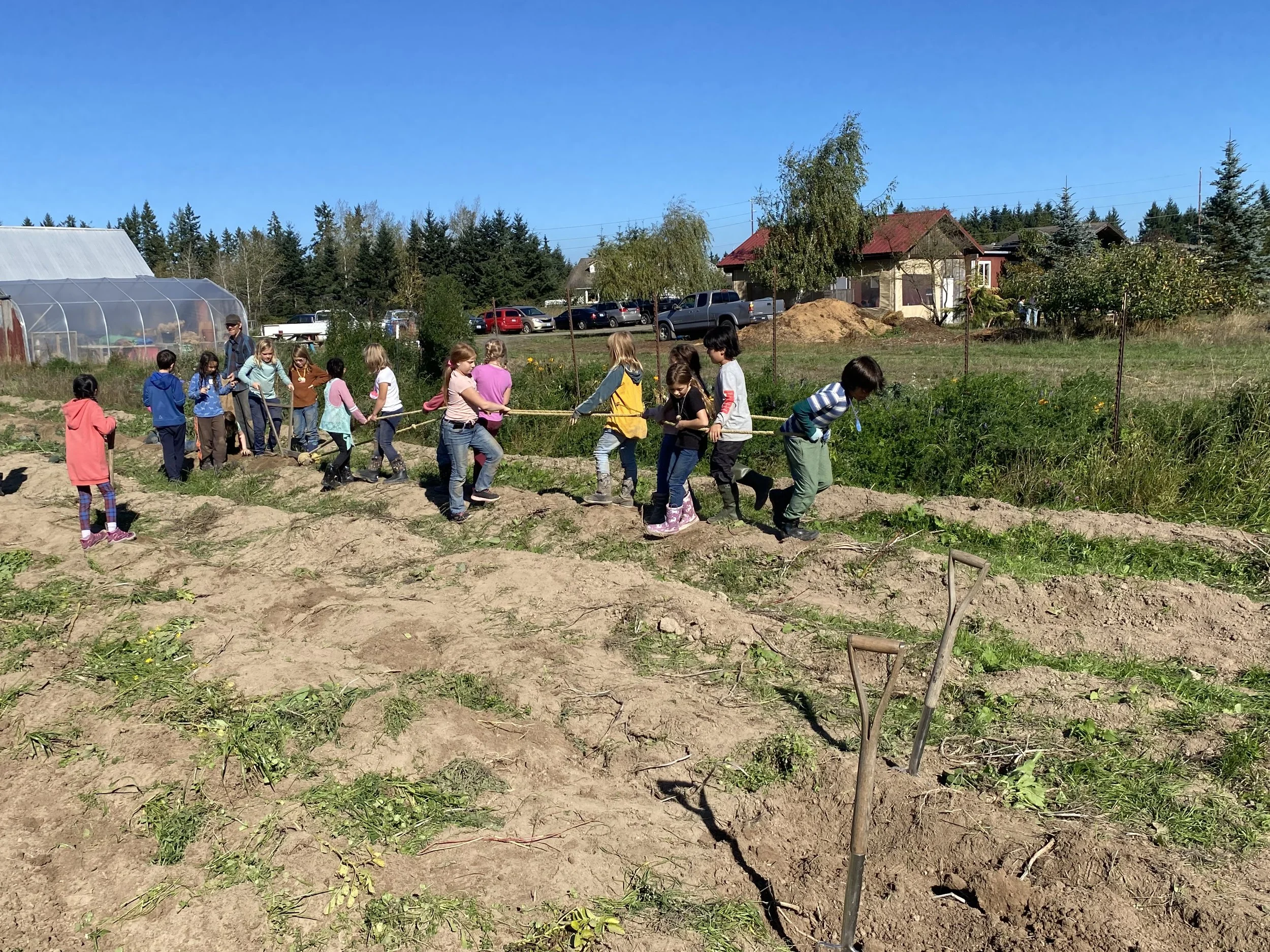
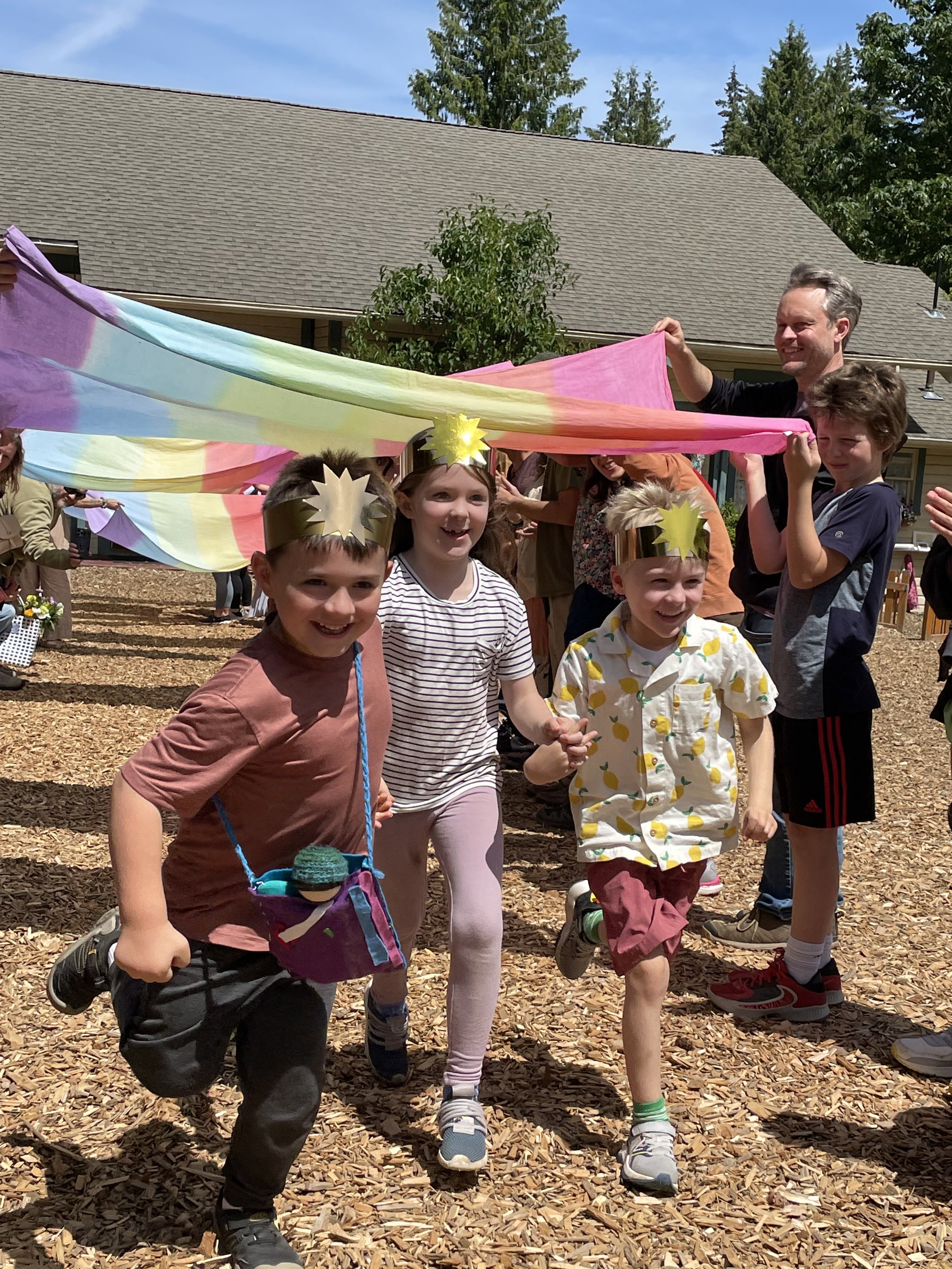
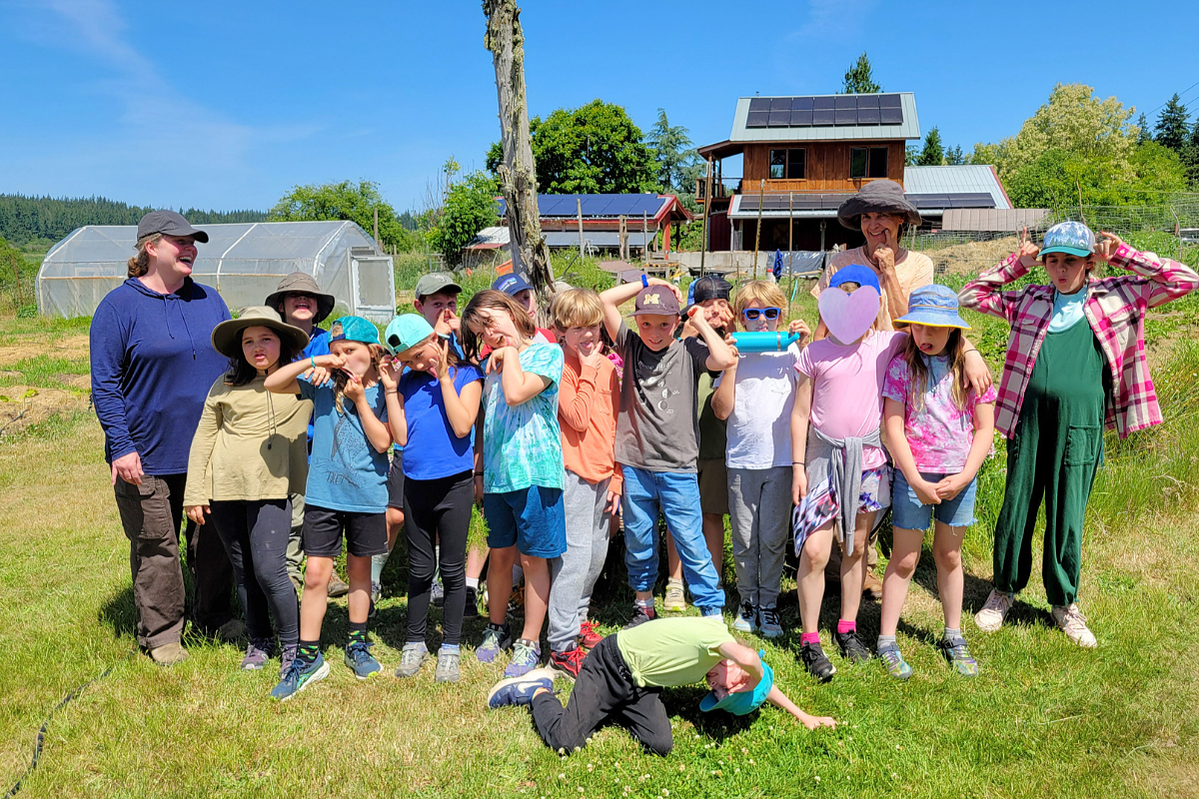
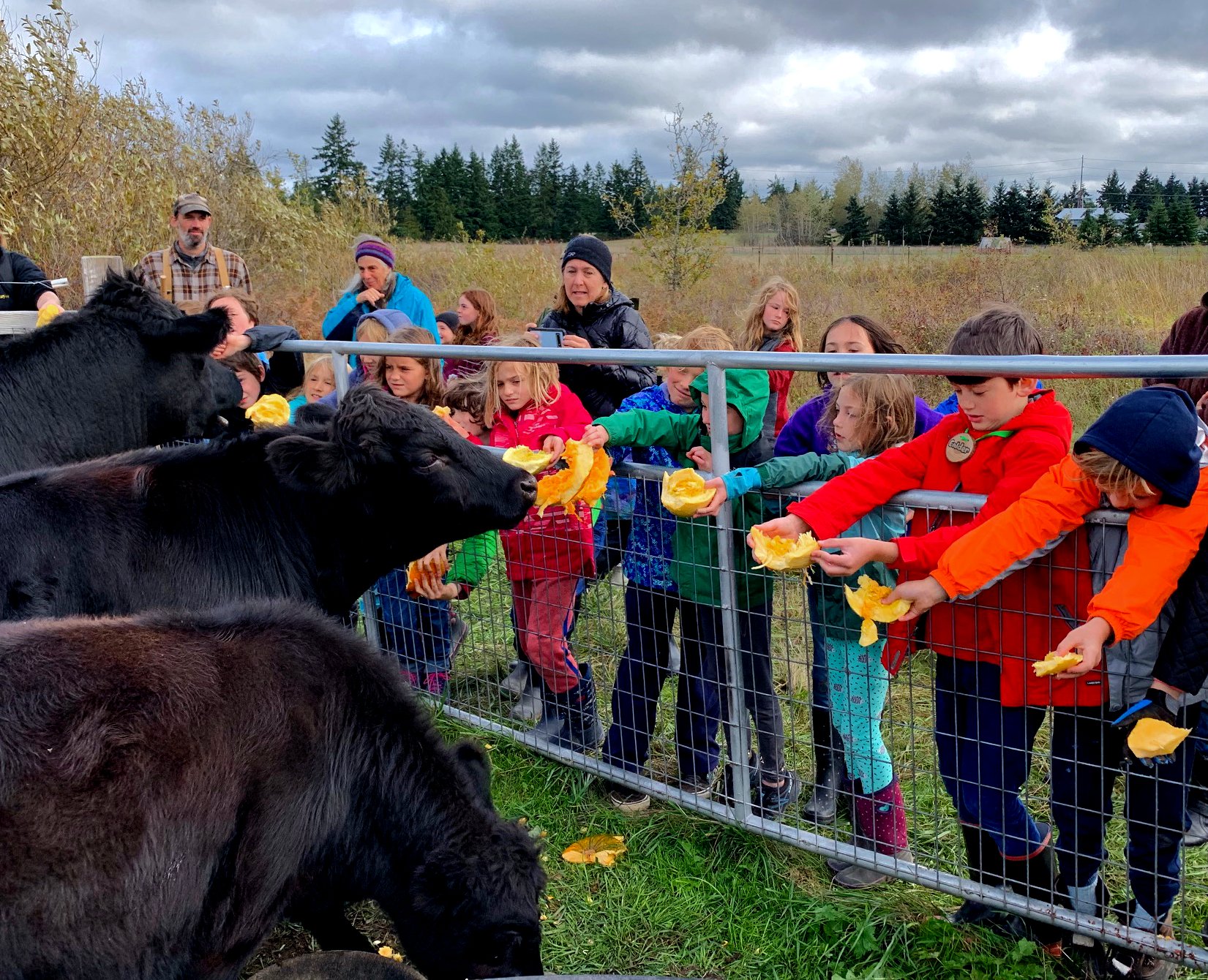
For their first regional event, third graders travel to the Olympic Peninsula for two days of rigorous farm chores and a night of campfire songs and camping under the stars, joining several other Waldorf schools at Sunfield Biodynamic Farm & Waldorf School. From sunrise to sundown, students take part in pre-industrial farming practices such as horse-drawn plowing, composting, sowing, and harvesting. They'll also work with sheep's wool, grind oats into oatmeal, shell beans, feed cows, brush goats, and hold chicks and ducks. Working side-by-side with other third graders, students gain a firsthand sense of the cyclical, interconnected rhythms of nature and the farmer's responsibility within it, forming memorable experiences and relationships along the way.
Shelter Projects
Cursive Writing
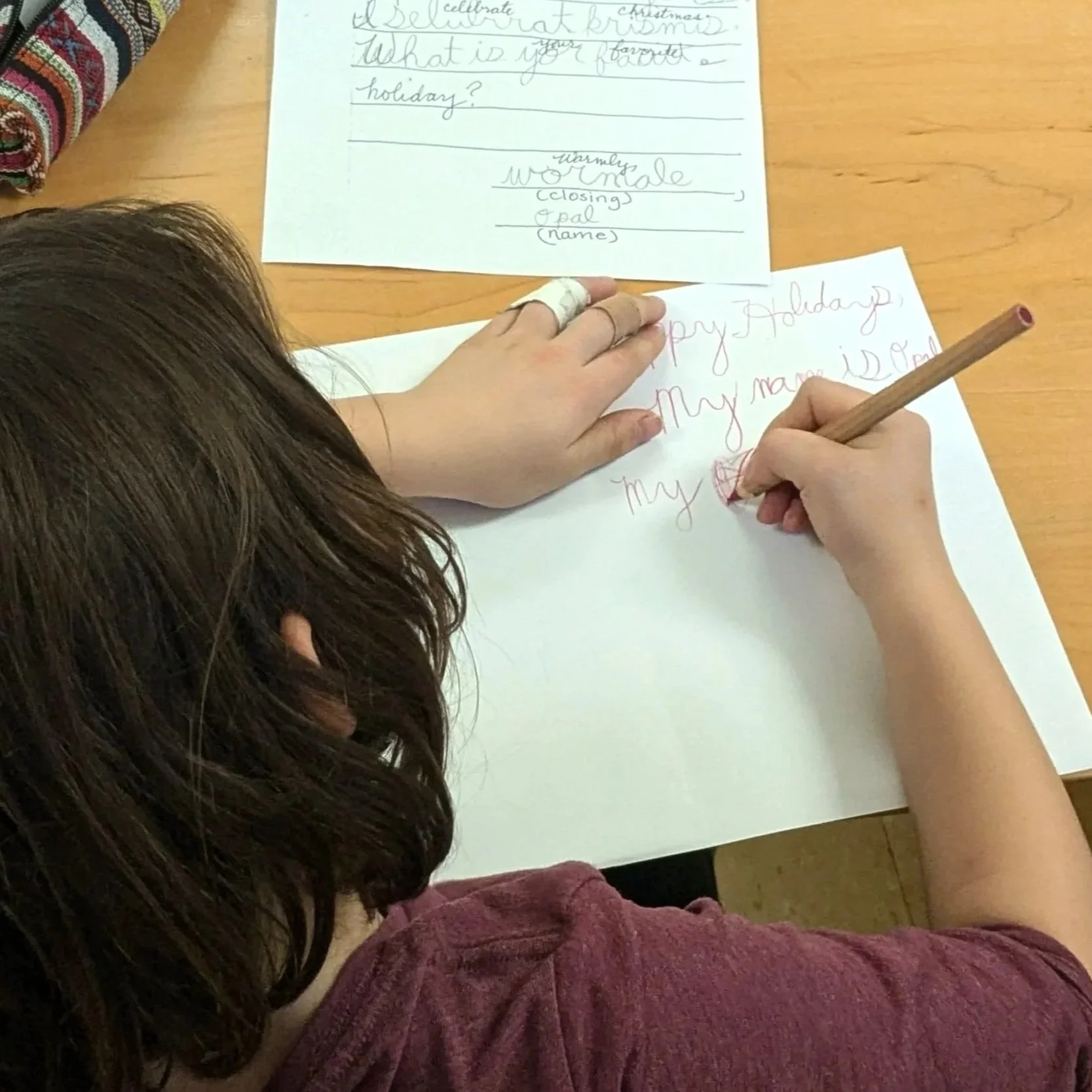
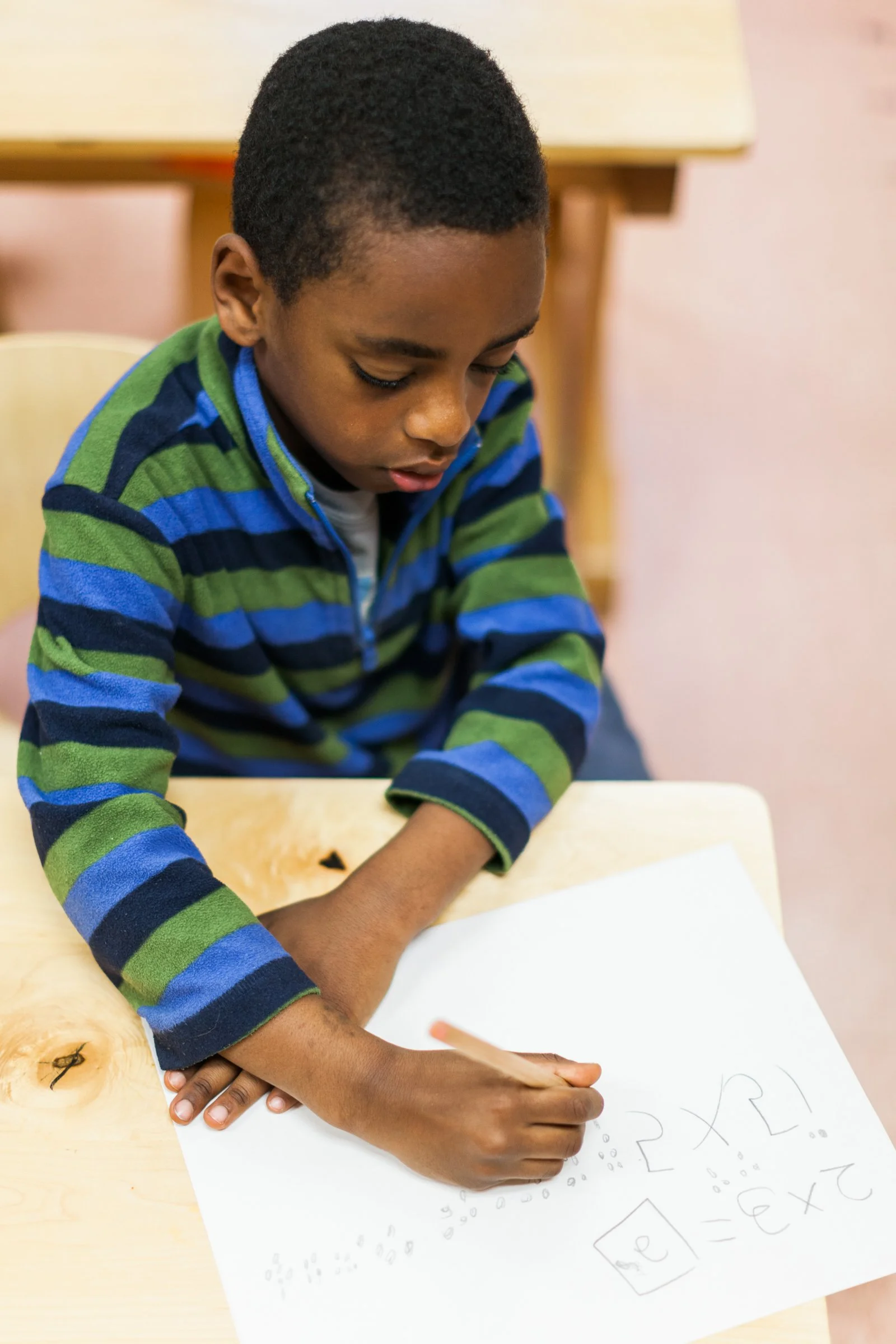
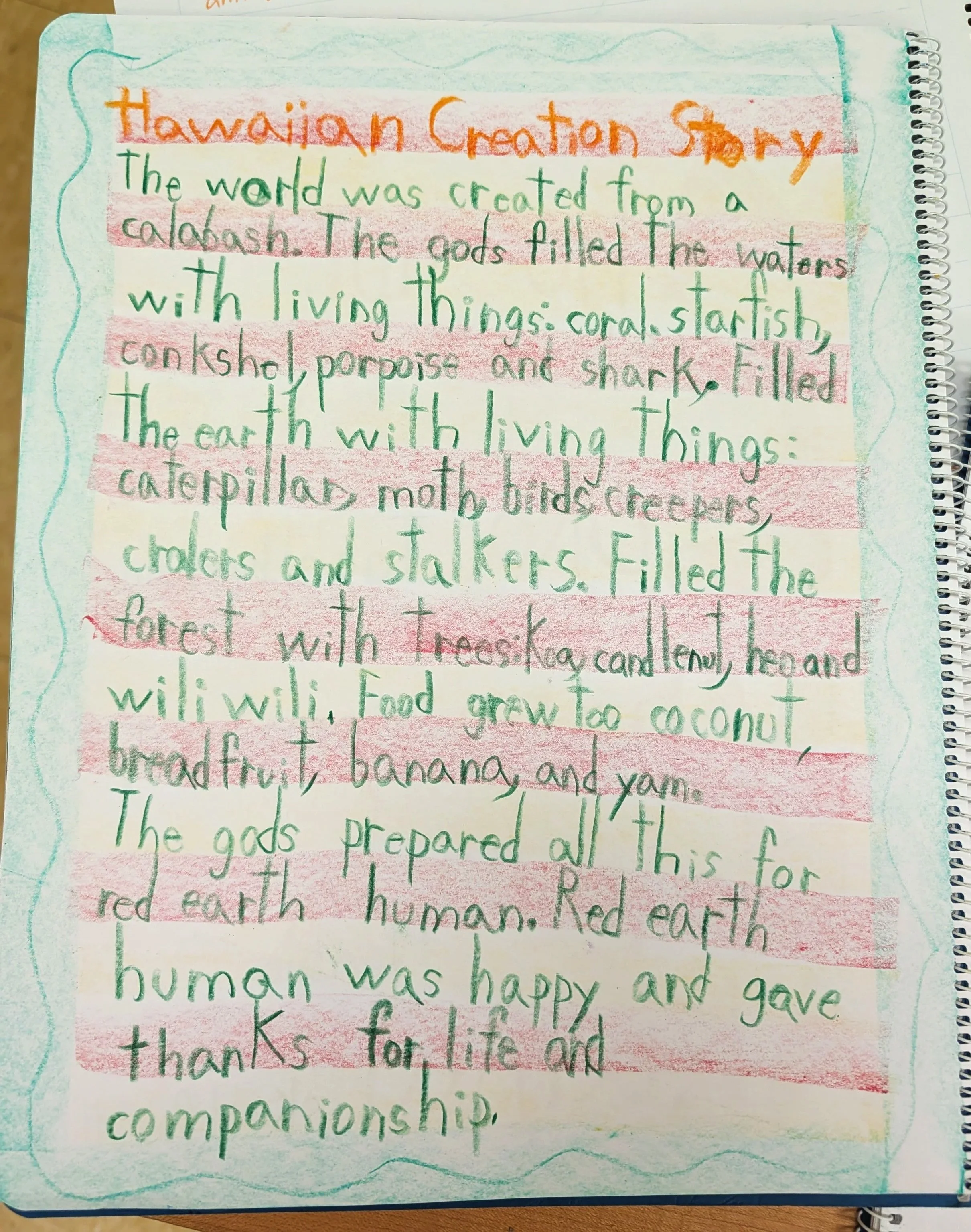
In Waldorf schools, students first develop their printing out of pictures and images — the letter "S" born from the shape of a snake, "M" from the contours of a distant mountain — alongside practice in form drawing. This approach is rooted in the understanding that what we do with our hands, especially in the early years, gives shape to the brain itself. Building on this foundation, students learn cursive in Second or Third Grade — a tradition that offers far more than faster handwriting. Cursive is a genuine brain-builder: it strengthens eye-hand coordination, reduces letter reversals, and opens pathways between the brain's left and right hemispheres through its natural looping motion. Because writing in script is faster than printing, students can capture their ideas more fluidly, laying groundwork for future essay writing — while also connecting them to history, art, and the simple, lasting joy of a handwritten note.
Cursive Writing
Shelter Projects
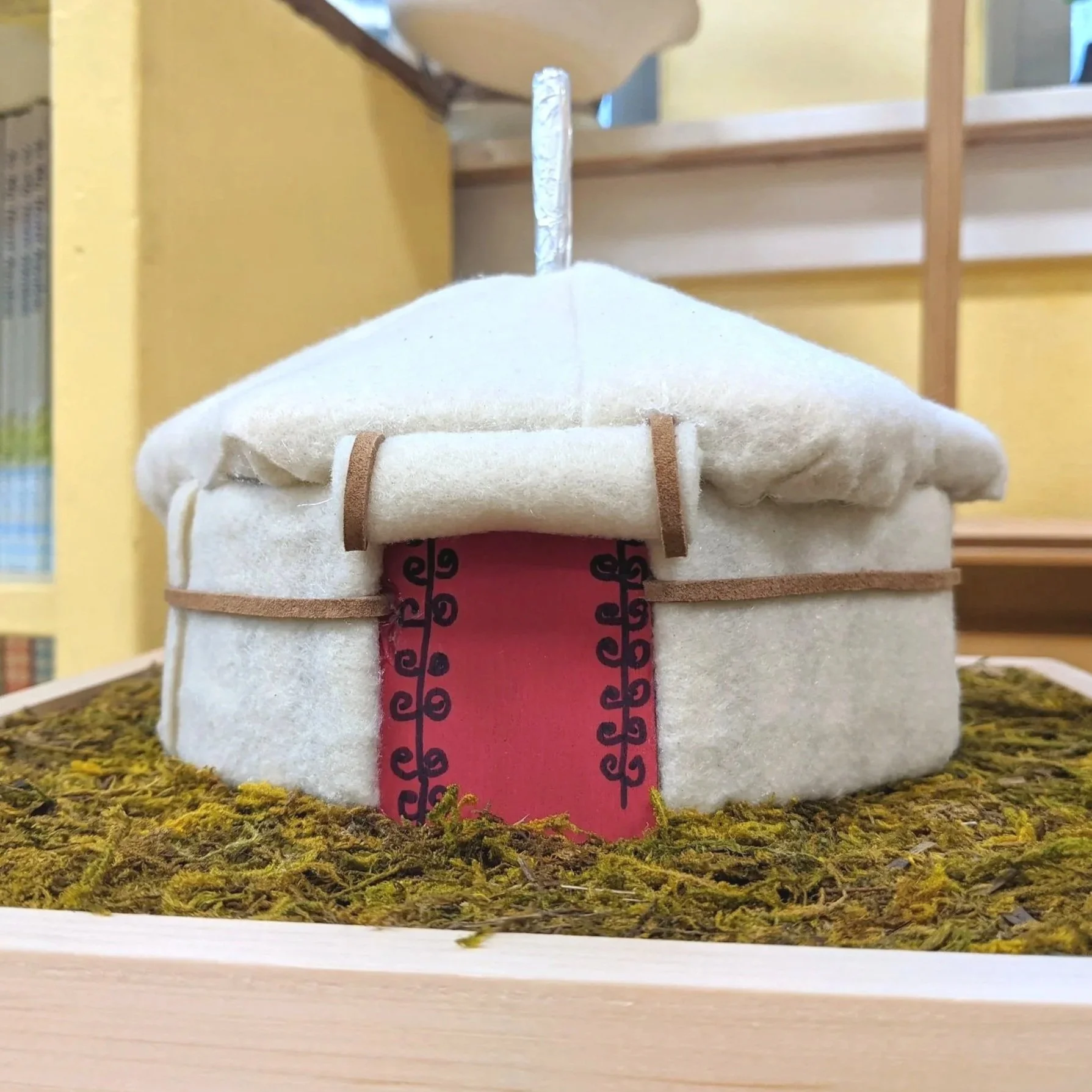
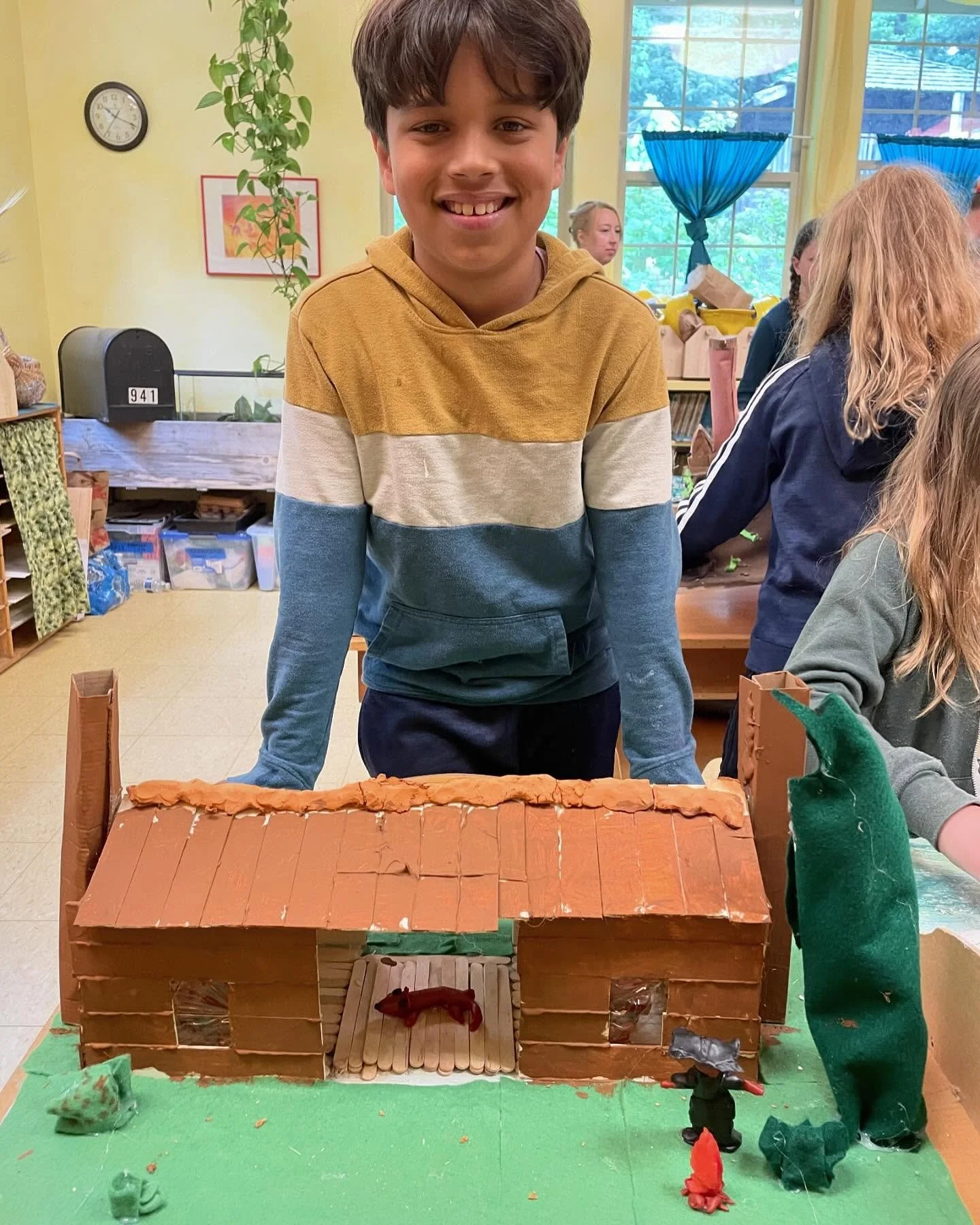
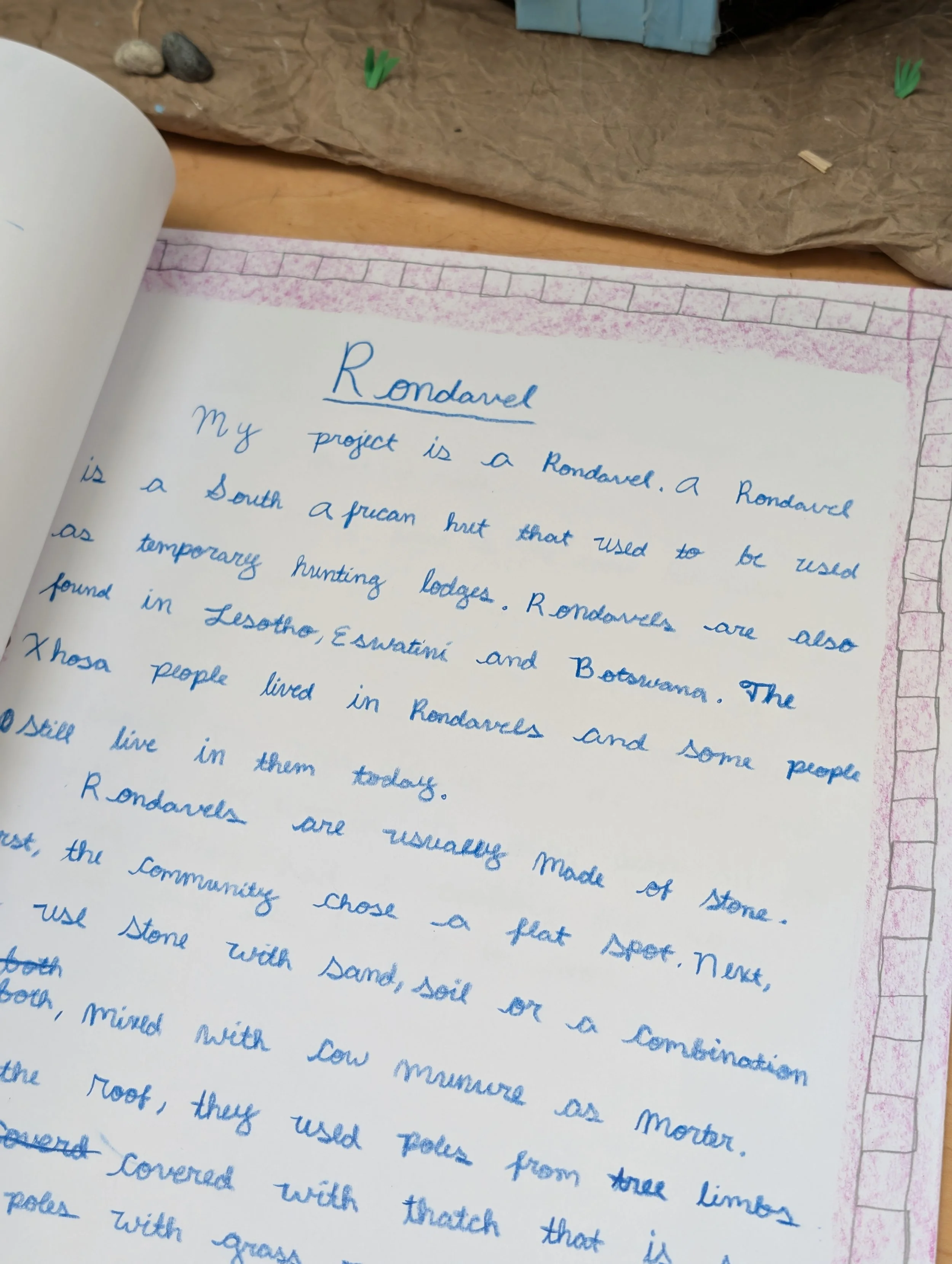
From branches and cedar planks to bricks of clay, bamboo, reeds, and stone, Grade 3 travels through far-away and not-so-distant lands to discover the many ways humans have created shelter from the resources around them, studying primitive homes from early civilizations alongside traditional and indigenous dwellings still used today. Considering materials, purpose, and place, students research, design, and build their own model shelter, and write their first handwritten research report on their chosen dwelling and the people who inhabit it.
This project meets the children at an important developmental moment, when they are beginning to experience themselves as more independent and separate from the world around them (“the 9 year change”). The study of shelter offers a grounding, practical way to explore how human beings create safety, belonging, and relationship to the land, while offering a rich and integrated academic experience of history, geography, and language arts.
Read More
Third Grade in Photos
Meet the Teaching Team
Classroom Teachers
Staff Photos
Specialty Teachers
Staff Photos