
Third Grade: A Year of Practical Wonder
Around age nine, something shifts in a child. The magical, dreamlike oneness of early childhood begins to fall away, and in its place comes a new and sometimes unsettling awareness: I am a separate person in a big, wide world. Waldorf educators call this the "nine-year change," and it is the developmental heartbeat of the entire third grade year.
Our curriculum meets this shift head-on — not by rushing children toward abstraction, but by grounding them more deeply in the practical, tangible work of human life: farming, building, cooking, and creating.
Stories of Origins
Third graders are natural question-askers, suddenly curious about where the world — and they themselves — came from. We answer that curiosity with creation stories from across the globe and Old Testament narratives, tales of people striving to find their place and purpose in a newly separate world. These are not religious lessons so much as literature: stories that mirror, almost exactly, what a nine-year-old is feeling as they step out of the "paradise" of early childhood and into a more independent relationship with the world around them.
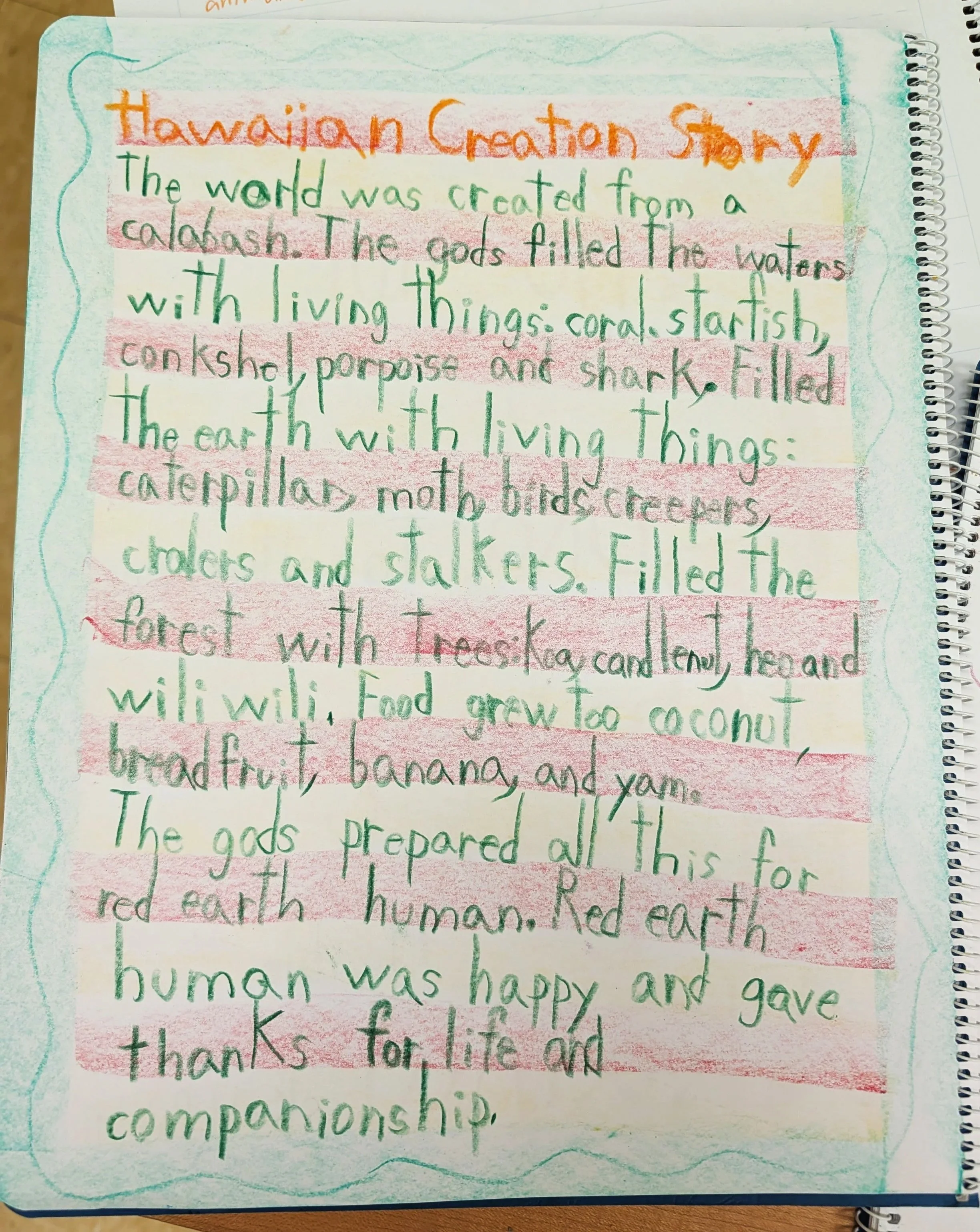
Learning Through Real Work
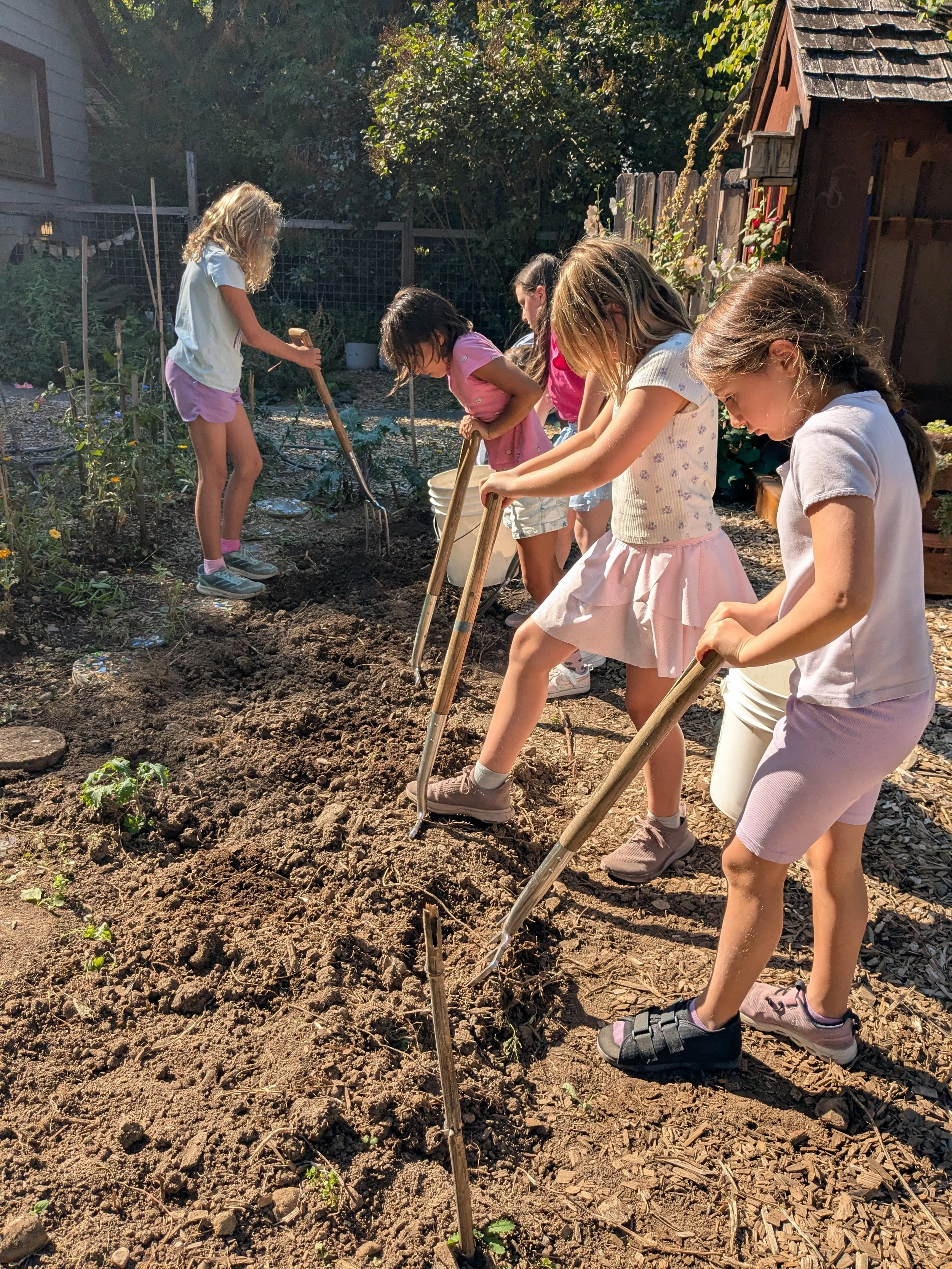
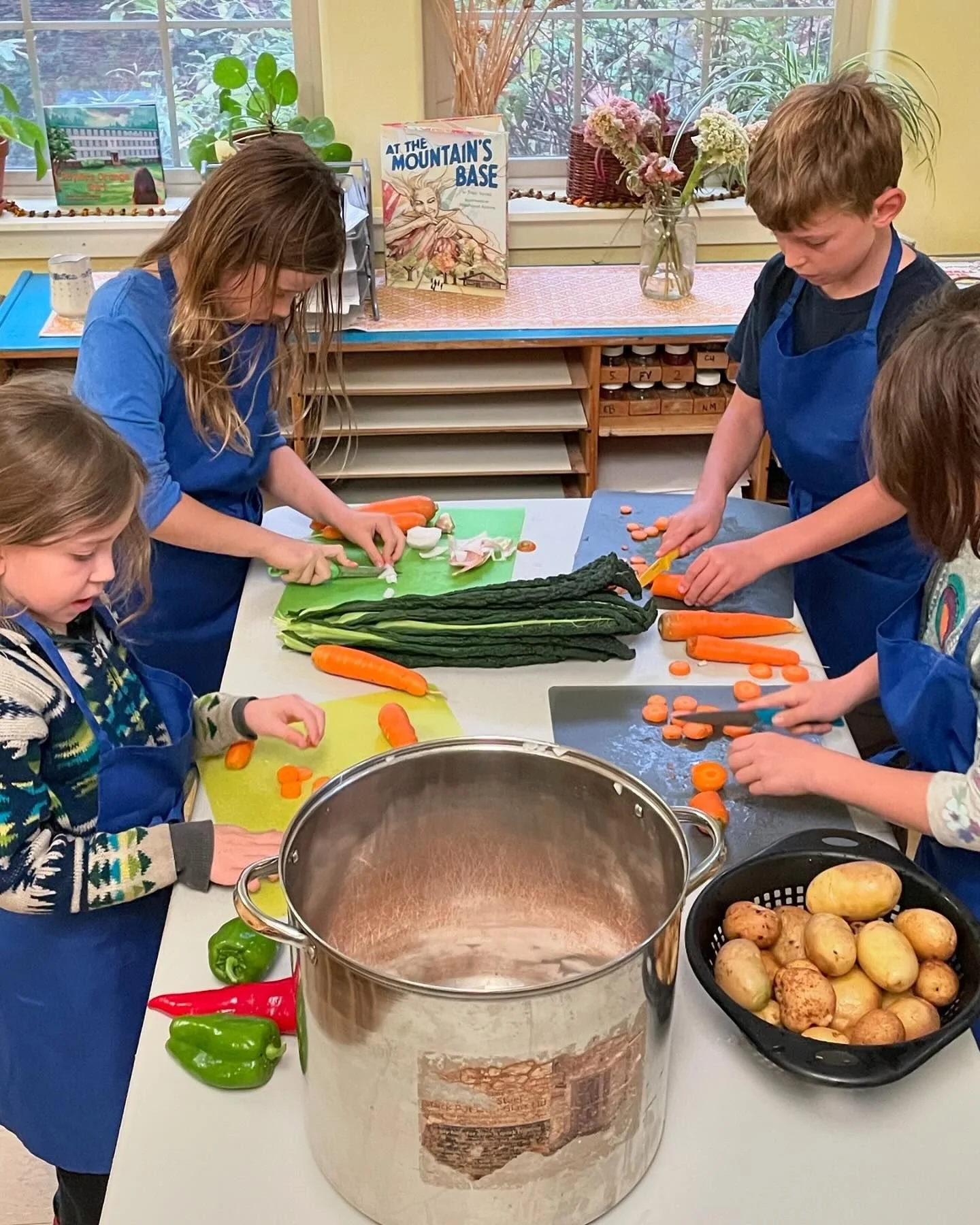
This is the year academics get their hands dirty — literally. Third graders take on real community responsibilities, like tending the school garden and collecting compost, and they travel to local farms to plant, harvest, and care for animals. In the classroom kitchen, they cook and bake dishes from around the world, often using ingredients they've grown or harvested themselves.
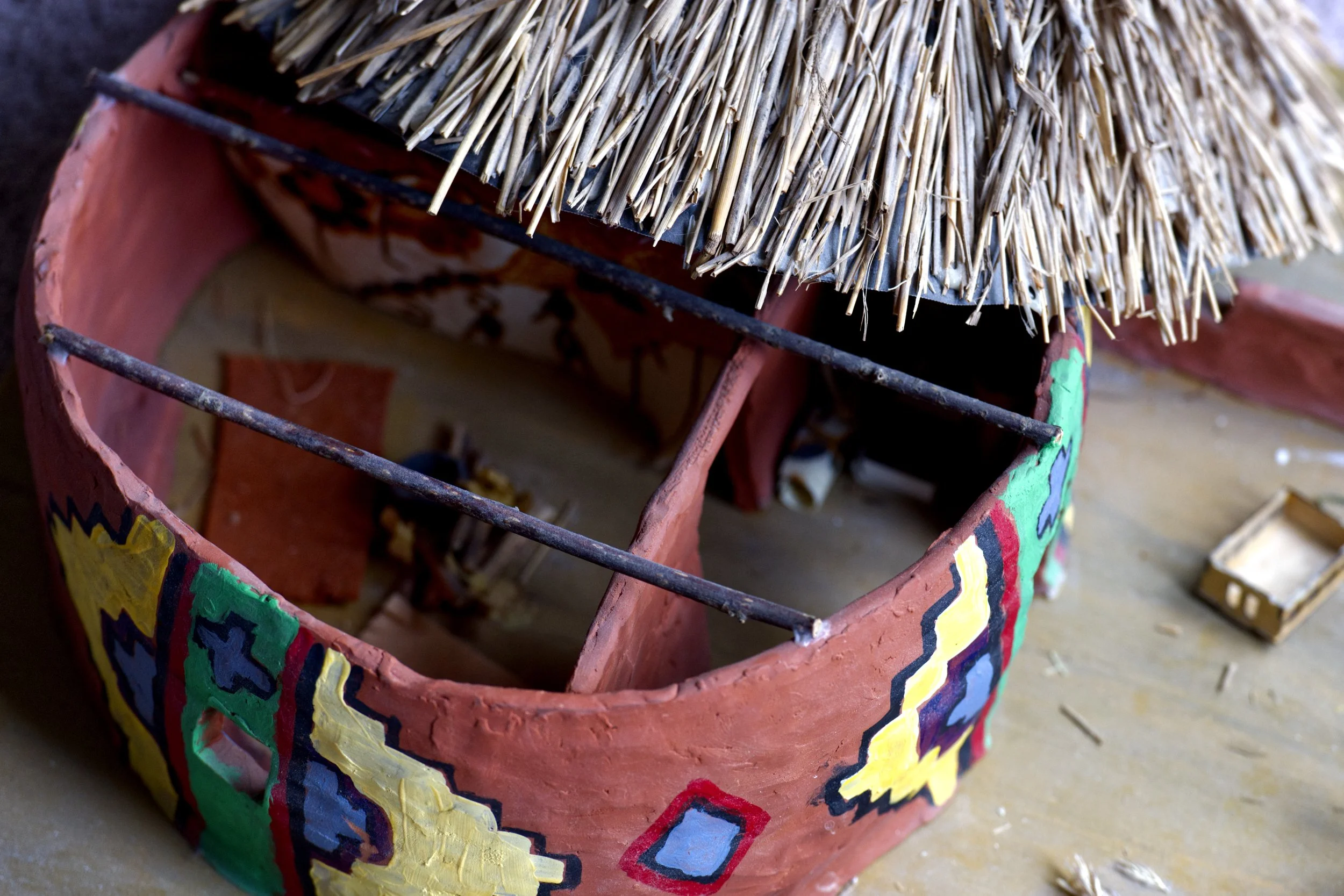
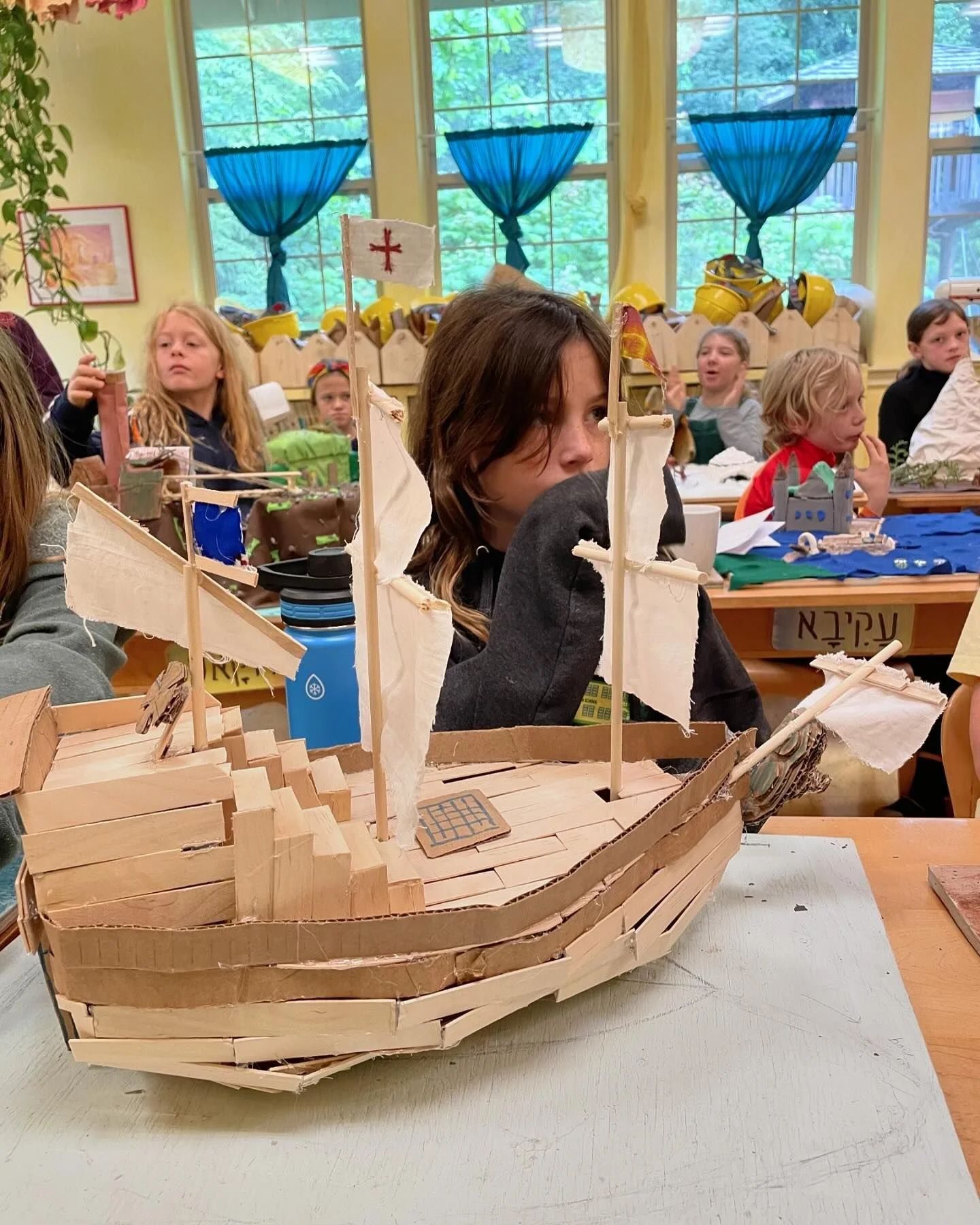
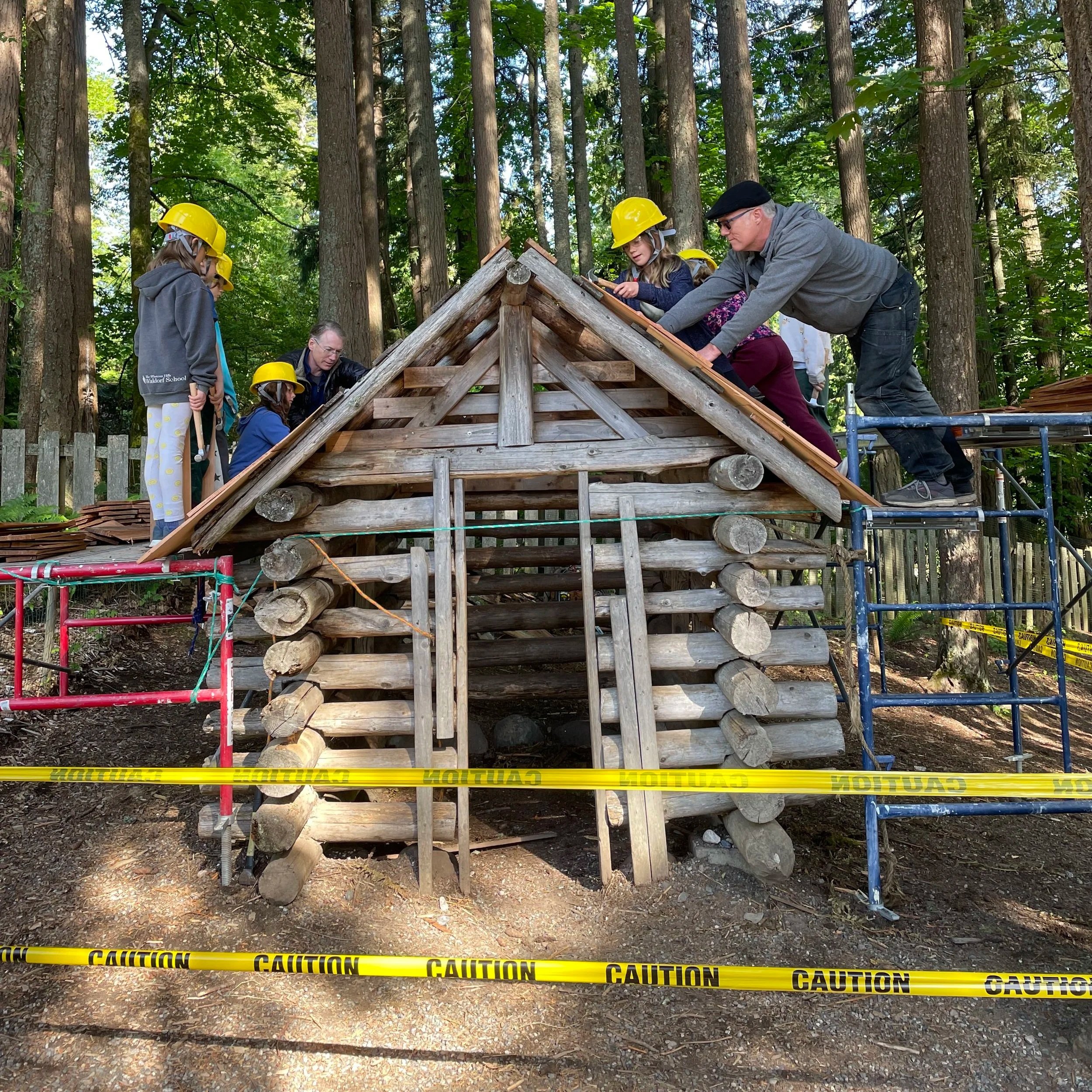
That hands-on spirit carries into a shelter-building unit, where students research and construct model dwellings from cultures past and present, exploring building materials, carpentry basics, and linear measurement along the way. It all builds toward the year's signature project: designing and constructing an actual structure on campus, with parent volunteers lending a hand.
Math Rooted in the Real World
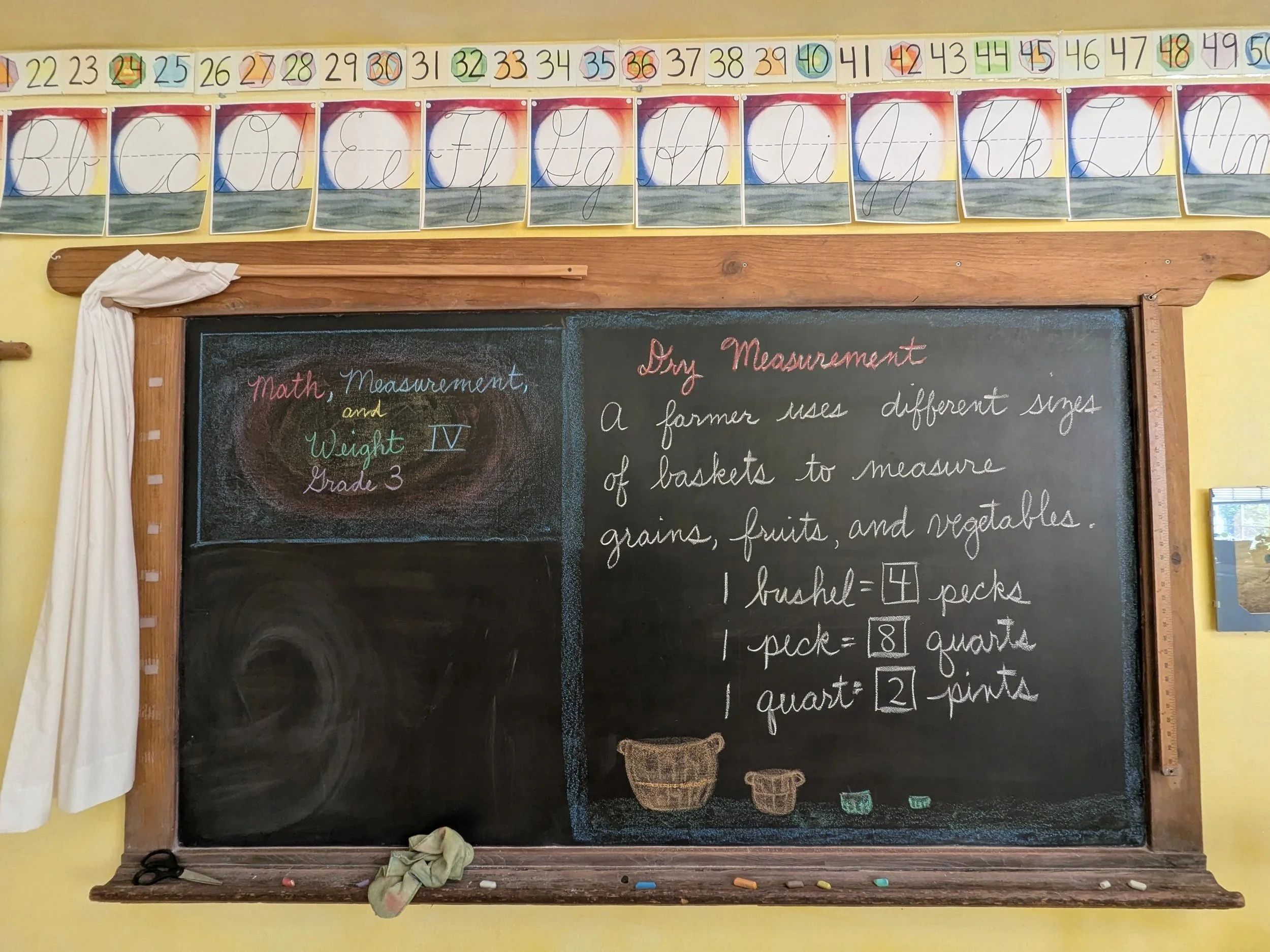
Third grade math channels this newly outward-facing curiosity into units of measurement — inches and feet, weights and volumes — so that students learn to quantify the very world they're exploring. Multiplication, division, place value, and telling time round out the year, alongside "shopkeeper" activities and skip counting that introduce the history and practical use of money.
Growing Skills Across the Curriculum
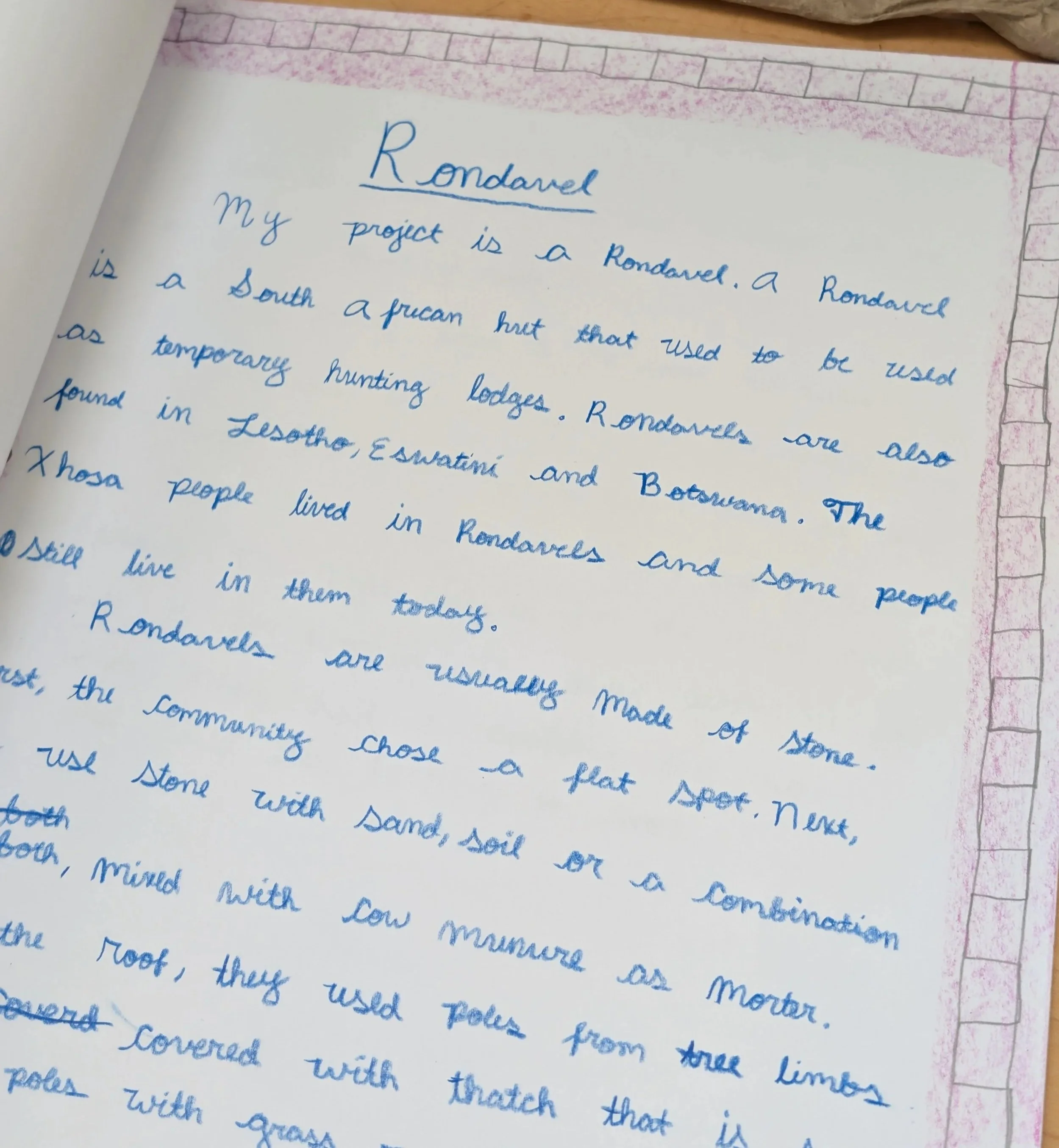
Language arts also takes a leap forward this year with the introduction of cursive writing, alongside grammar study, dictation, journaling, and students' first written research reports. Music, movement, and world language study continue to build, and practical arts like crochet round out a curriculum built on skill, perseverance, and confidence.
A Year That Points Outward
Whether they're weighing produce at a farm, measuring boards for a shelter, or writing their first research report, third graders are practicing the same lesson again and again: the world is bigger than they knew, and they have real capacities to meet it. By year's end, that farm-to-classroom, garden-to-kitchen, measurement-to-construction journey leaves them with more than new skills — it leaves them with a solid, grounded sense of their own growing independence, and genuine excitement for the wider world that awaits.