Why we take our time with reading
We want our graduates to excel at reading AND love doing it. Starting in Nursery and Preschool, our students are immersed in a classroom rich with language — stories, songs, and conversation — to build a strong foundation of listening and oral skill. We introduce reading when a child is developmentally ready, not on a fixed testing timeline. The result is deeper reading comprehension and graduates who read for life.
Read more about developmentally-grounded teaching.
Read More
Why our students create their own textbooks
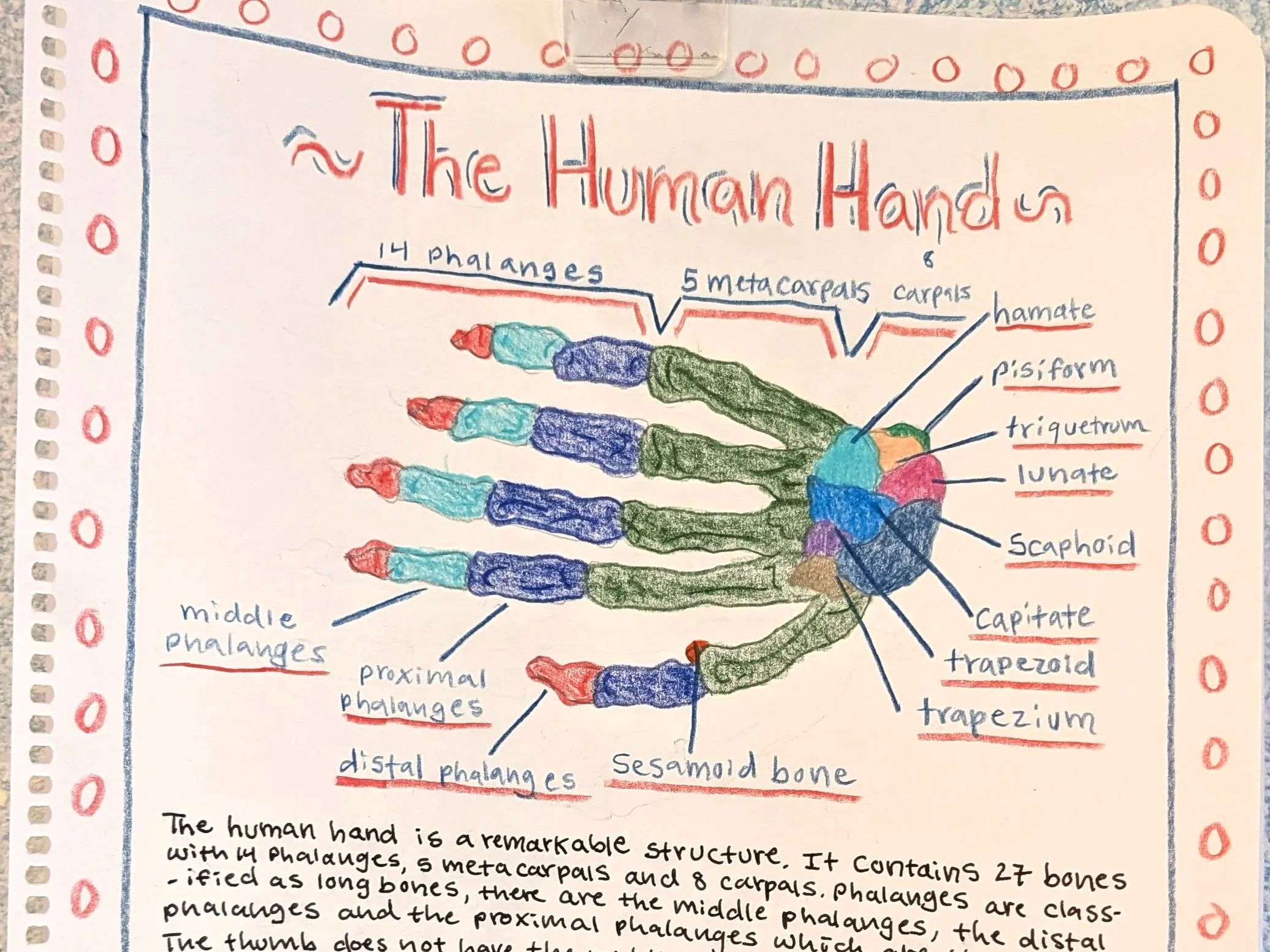
Our students don’t simply memorize facts from textbooks–they create their own “main lesson books,” writing, illustrating, and organizing what they've learned in their own words and images. Processing information by hand deepens conceptual understanding and retention, and the final product is a unique and beautiful record of the year’s learning for each student.
Read more about why we prioritize handwriting.
Read More
Why we knit (and carve, and sew, and paint...)
Knitting–and our other hand work, like woodworking, embroidery, and visual arts–isn't just about making a nice pair of socks or a wooden spoon. It's bilateral, fine-motor work that builds spatial awareness, patience, coordination, and math skills. And the socks are pretty comfy too.
Read More
Why our teachers stay with their class
Waldorf teachers often stay with the same class for multiple years, building relationships deep enough to truly know each child and calibrate instruction to each student's strengths, struggles, and growth over time. That continuity supports more consistent progress than a model where students restart with a new teacher, and a new set of expectations, every year — and it creates a steady, known community that many families come to see as central to the Waldorf experience.
Read More
Why we keep screens out of the classroom
Screens are great at capturing attention, but attention isn't the same as learning. We give children years of unmediated experience — building focus, attention, imagination, and social skills — before introducing technology deliberately, once they're old enough to use it as a tool rather than be used by it. If the people who make the technology aren’t letting their kids have it in school, should you?
Learn more about our evidence-based approach to technology.
Read More
Why every student learns a stringed instrument
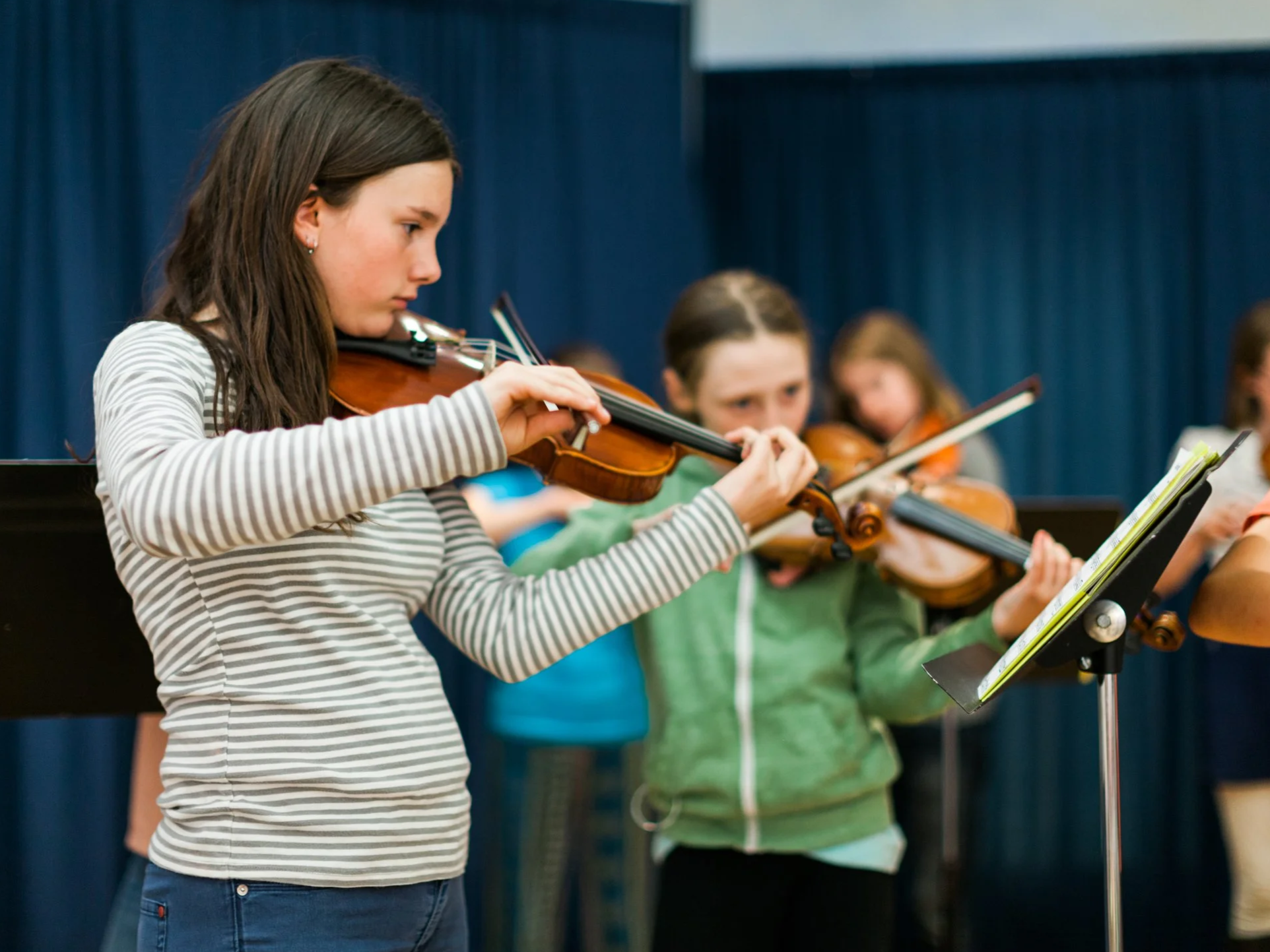
Starting in 4th grade, every student learns violin, viola, or cello. Playing a stringed instrument is an intense workout for the brain, engaging visual, auditory, and motor cortices simultaneously. Students develop a lasting appreciation of the value of practice and perseverance, along with listening and teamwork skills that carry over into every other subject.
Learn more about our music curriculum.
Read More
Why movement and music are part of everything
A well-established body of research shows that cognitive processing is closely tied to bodily activity — in other words, children learn best when the whole body, not just the mind, is engaged. Rather than confining movement and music to gym class or music lessons, we weave them into math, language arts, and history alike — clapping out multiplication tables, singing historical ballads, or walking through geometric forms in Eurythmy.
Read More
Why we teach an integrated curriculum
Research consistently shows that when subjects are taught in connection with one another — history through art and drama, science through direct observation and hands-on building, math through real-world application — students retain more and understand concepts more deeply than when the same material is taught in isolation. For us, this isn't just a pedagogical theory — it's how we build a curriculum that makes ideas stick.
Read more about integrated curriculum.
Read More
Why we play
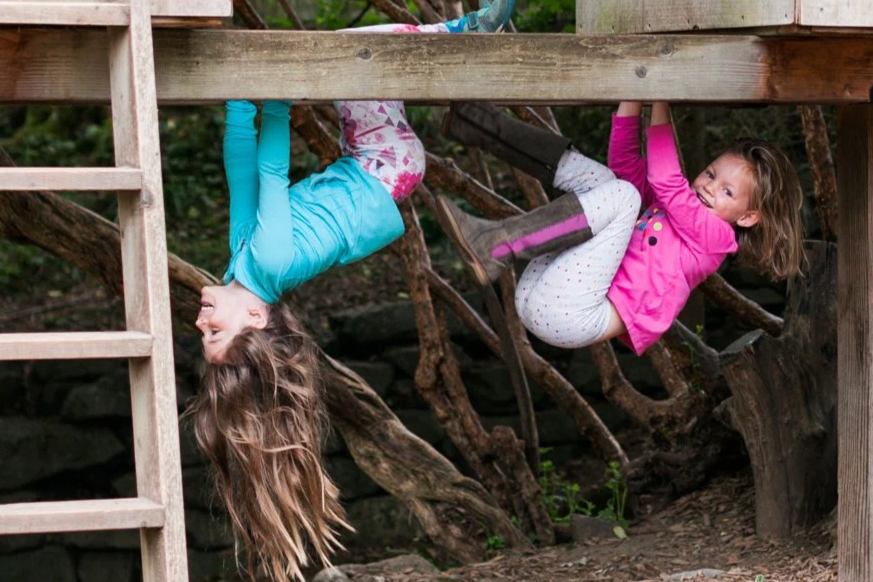
Free, unstructured play isn't a break from learning — it's where children develop some of their most important skills, like negotiation, imagination, risk-taking, and resilience. Our students’ play increases executive functioning and builds the capacities for problem-solving and focus that their later academic work will depend on.
Go deeper on the research supporting the importance of play.
Read More