8th Grade Visits the WA State Capitol
By class teacher Marlis Sandwith
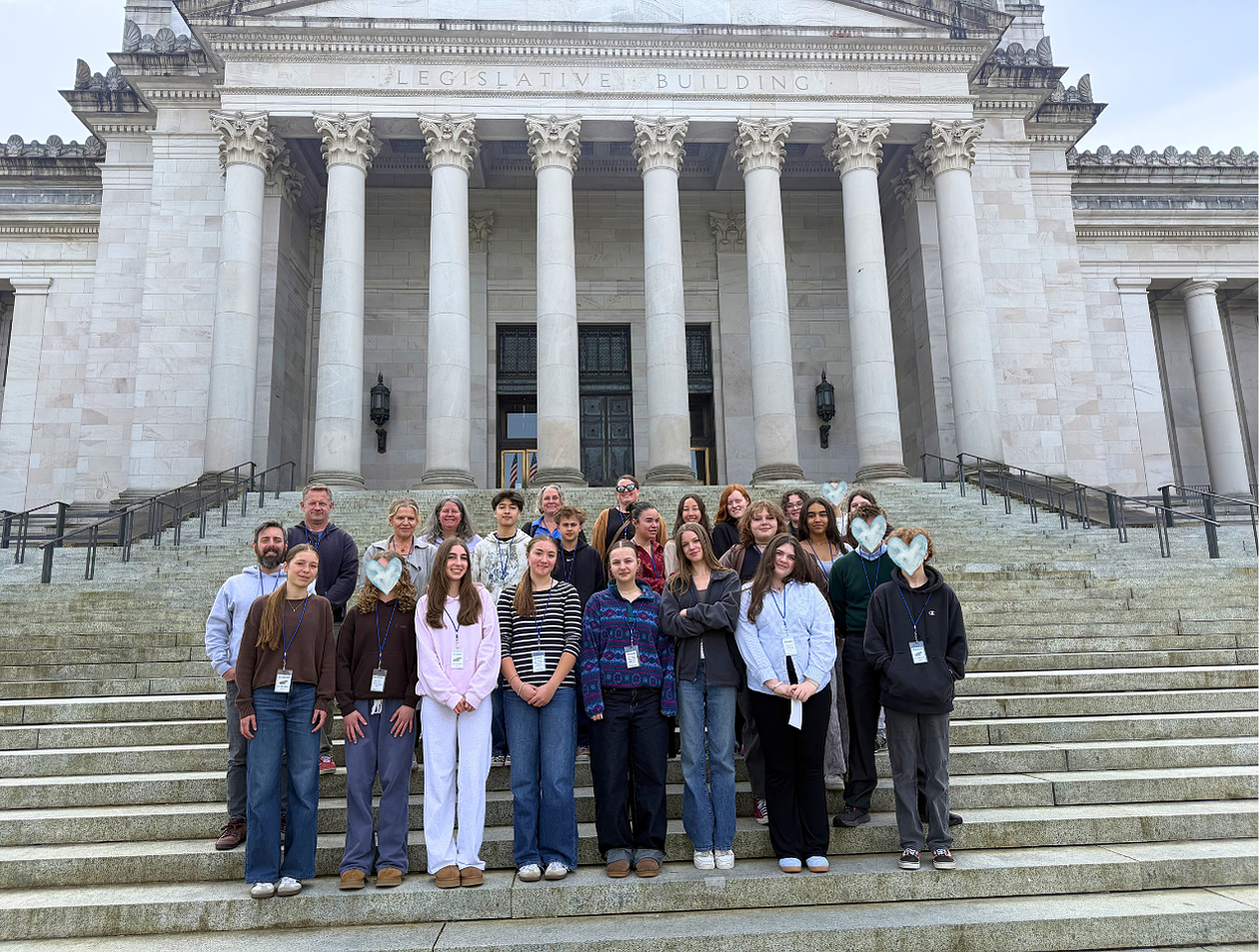
On the steps of the WA State Capitol building
Last Friday, our eighth grade class traveled to Olympia for a civic tour of the Washington State Capitol campus, a trip which felt especially meaningful after a school year full of history and civics study. Over the course of two history blocks, students traced the arc of history from the Enlightenment through the Gulf War, while also building a stronger understanding of the foundations of American government.
Along the way, they studied the Declaration of Independence, the Constitution and its key amendments, explored the three branches of government, learned how bills become laws, discussed citizen rights, and even tried their hands at the 100-question U.S. citizenship practice test. They also engaged in debates on public issues and took part in our weekly news steward rotation, in which students report on current events to the class. One thing that became clear in our studies is that many people (students as well as adults) are less familiar with how state government works than they might like to be. For that reason, it felt especially worthwhile to visit the very place where the governing of our state happens.
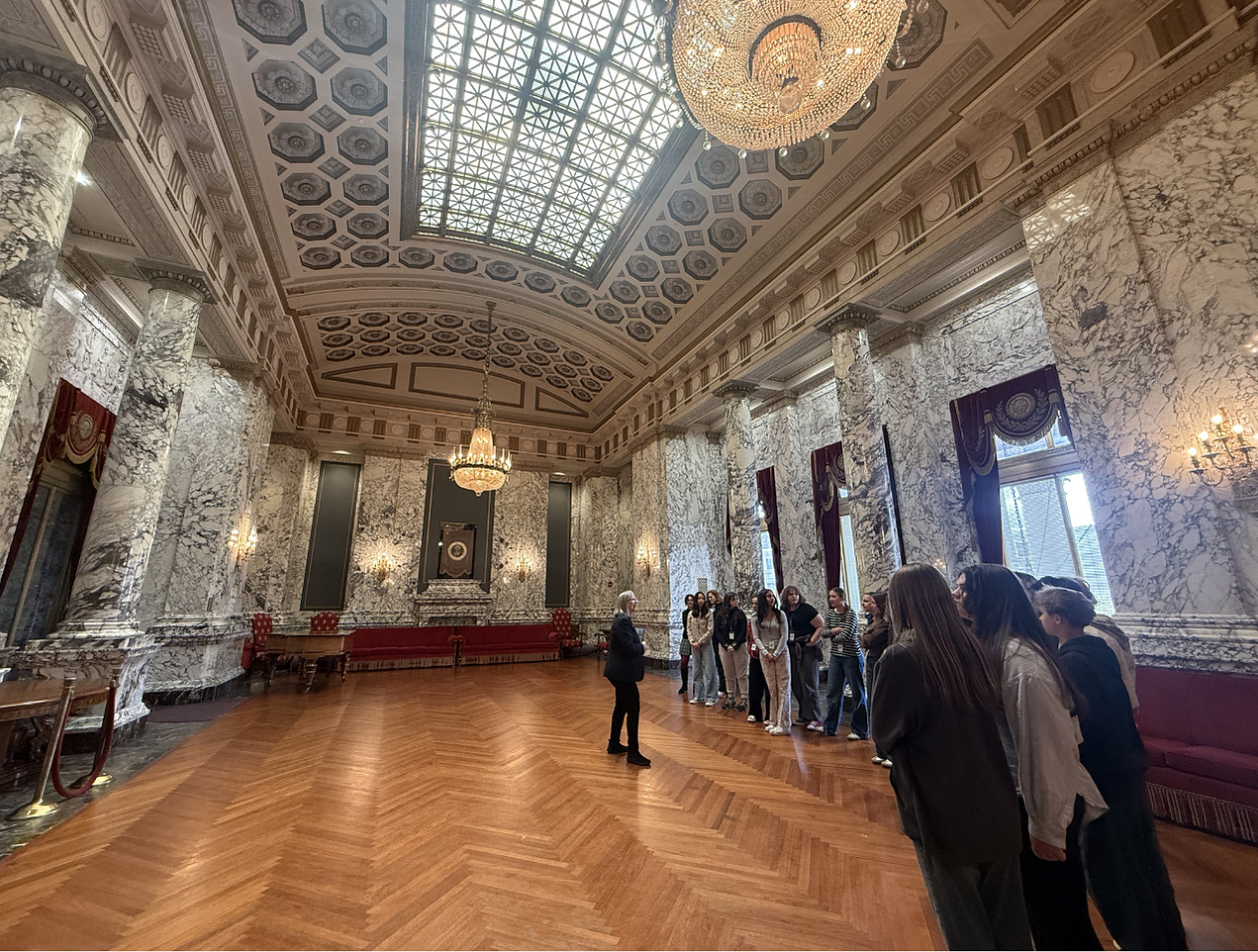
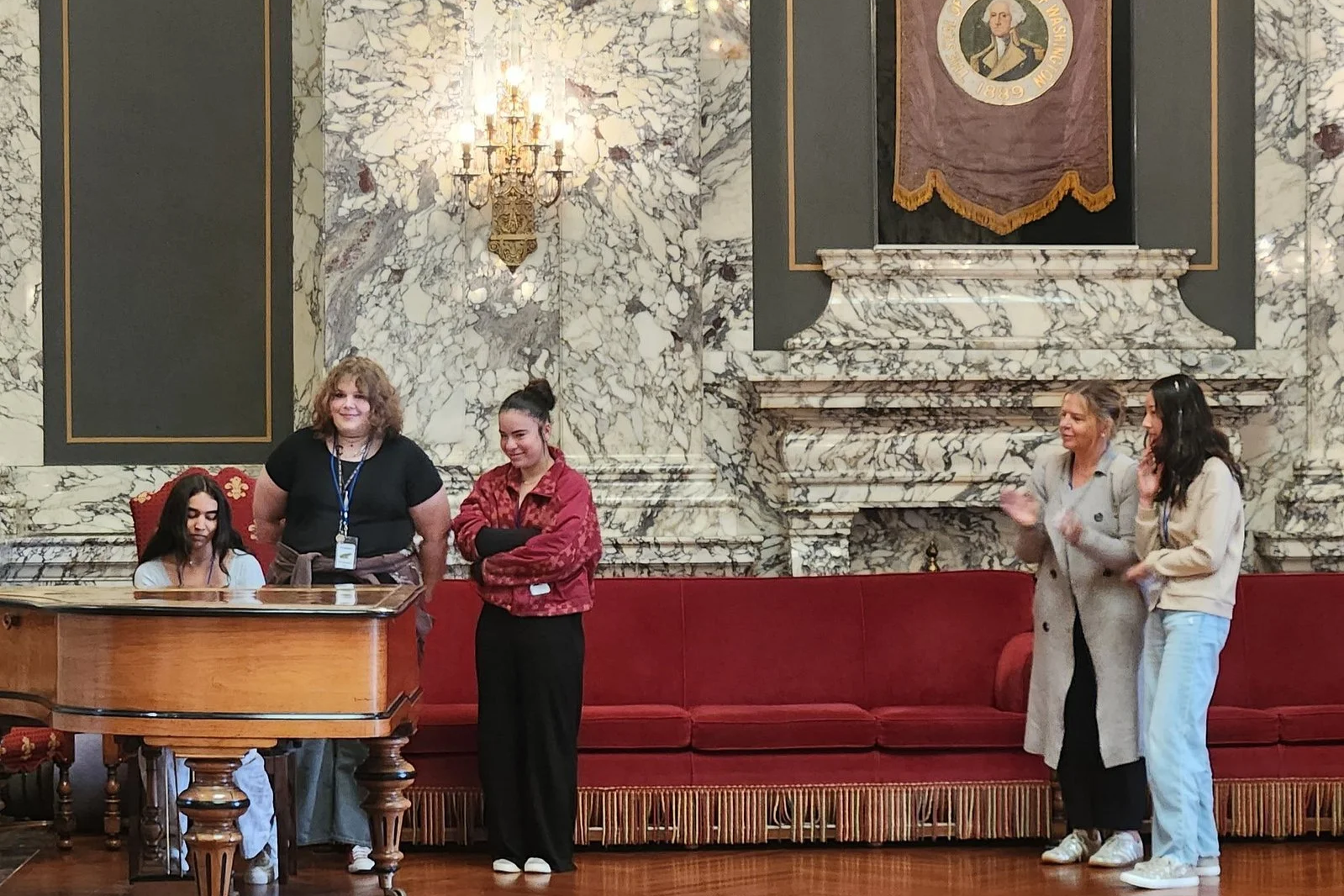
We braved I-5 and arrived in Olympia amid blooming trees and spring blossoms, which made for a beautiful setting before we even stepped indoors. Our guide, Therese, led us through a rich and memorable tour of the campus. Students visited the rotunda, both the legislative chambers, the Governor’s Office, the Secretary of State’s office and archives, the ballroom, and the Temple of Justice. In the ballroom, we heard the story of the grand piano there, and several students had the chance to play it themselves.
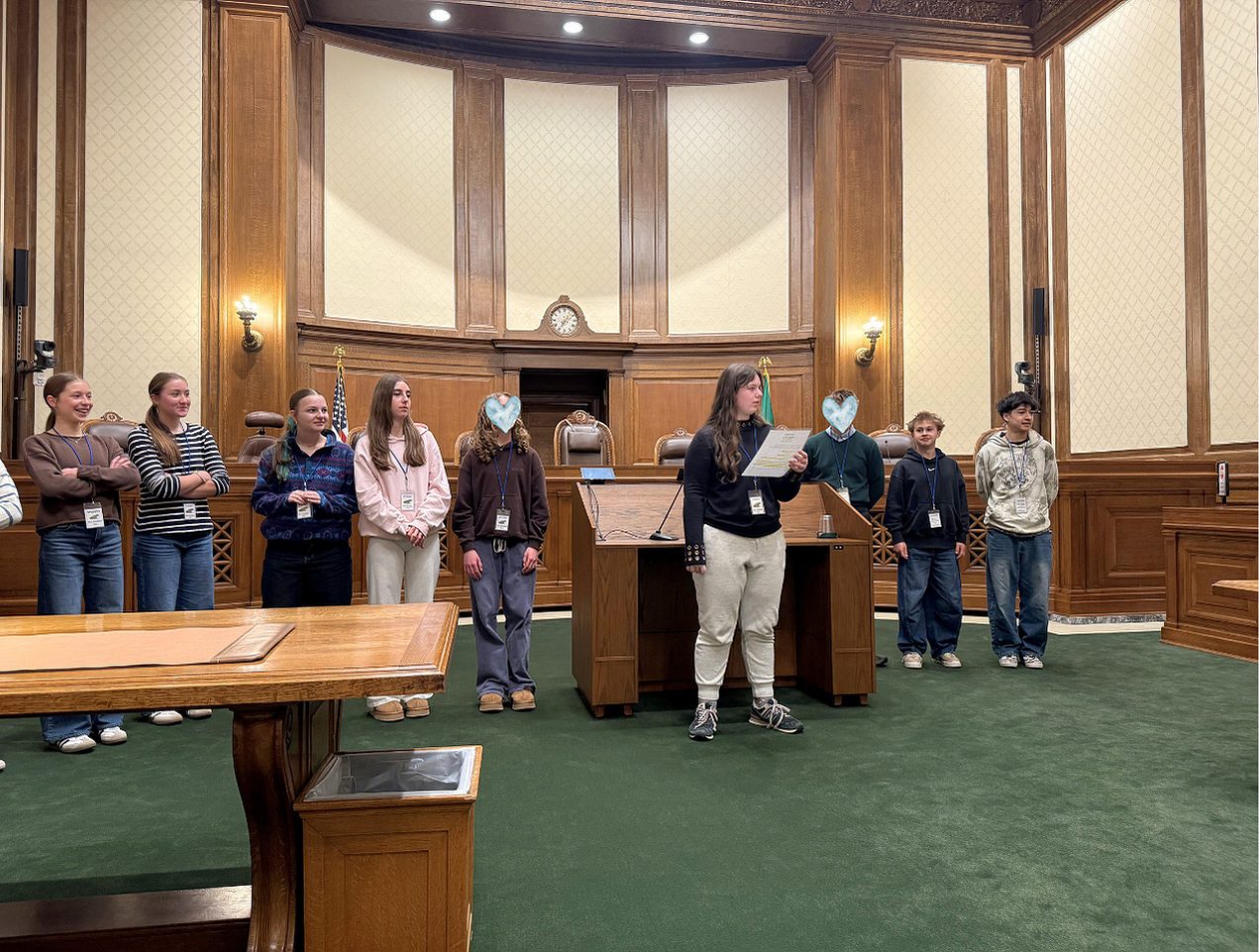
At the Temple of Justice, students participated in a mock trial based on a real Washington case (Gardner v. Loomis Armored Inc. 1996) connected to the development of our state’s Good Samaritan laws. That experience gave them a chance to step into the process of legal reasoning and public responsibility.
Although the Legislature and the courts were not in session during our visit, that turned out to have its advantages. While it would certainly have been exciting to see lawmakers or judges in action, the quieter campus gave us access to spaces we might not otherwise have seen so closely. Students were able to stand inside the rooms where public life unfolds and get a stronger sense that government is something real, physical, and ongoing.
Another strong impression from the day was the astonishing amount of symbolism built into the Capitol. The students quickly noticed that almost nothing in the building seemed accidental. Symbolism appears in the architecture, the flowers, the carpets, the carvings, and even numbers of steps. They were amazed to learn, for instance, that the rotunda is so large that the Statue of Liberty could fit inside it with room to spare, and that the great chandelier hanging there weighs 13,000 pounds. The building itself became a teacher, inviting students to ask why societies choose to express their values through art, materials, and design.
The trip also helped students see that democracy is not reserved only for adults. We learned that legislators want to hear from all of their constituents, including those who are not yet old enough to vote. Young people can participate by writing letters, sharing concerns, and applying for programs that bring them into closer contact with state government. Washington’s Legislative Page Program allows students ages 14 to 16 to spend a week in Olympia during the legislative session, learning firsthand about the process and assisting at the Capitol. Applications for the next session open each fall. Washington also has a Legislative Youth Advisory Council, a 22-member body made up of youth ages 14 to 18, created in 2005 to ensure that young people have a formal voice in state government.
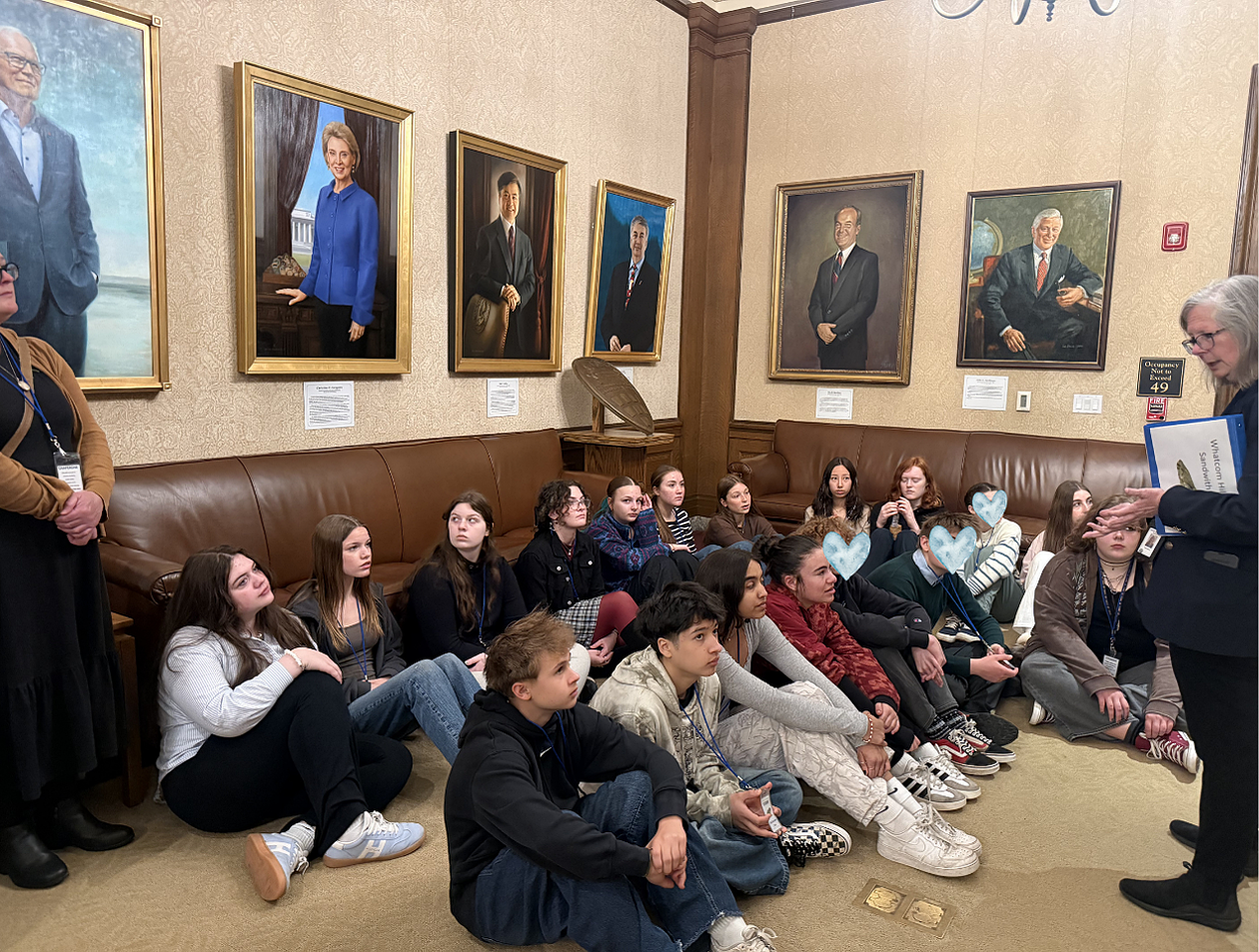
We also came away with a sharper sense of how representation works close to home. Washington’s district boundaries are redrawn every ten years after the census to reflect population changes, and residents can look up their own legislative district using the state’s district finder. For many families in our wider area, that leads to an interesting discovery: most of Whatcom County is in the 42nd Legislative District, while some nearby areas, including Sudden Valley and parts of Skagit and San Juan Counties, are in the 40th.
Most of all, I think the trip made government feel more real to the students. They have spent the year studying ideals such as liberty, representation, rights, law, and civic responsibility. To walk through the actual spaces where those ideas are debated, challenged, and carried into action gave those studies a different kind of life. They left not only with new knowledge, but with a sense that democracy is something they can enter into, question, and help shape.