2026 5th Grade Greek Games
By Grade 5 Teacher James McDonald
The Greek Games! The students have been working toward this for much of the year, and most of that work was with Movement teacher Mrs. Tabor.
We arrived at Camp Don Bosco and in a jovial gathering, the students and chaperones were assigned to their city-states. Most of our students only had one other classmate in their city-state, so they were mostly with strangers. It was fun to see them timidly shamble toward their new brethren, knowing that, of course, by the end of the Games, they would be joined in the Greek manner, i.e., at the hip.
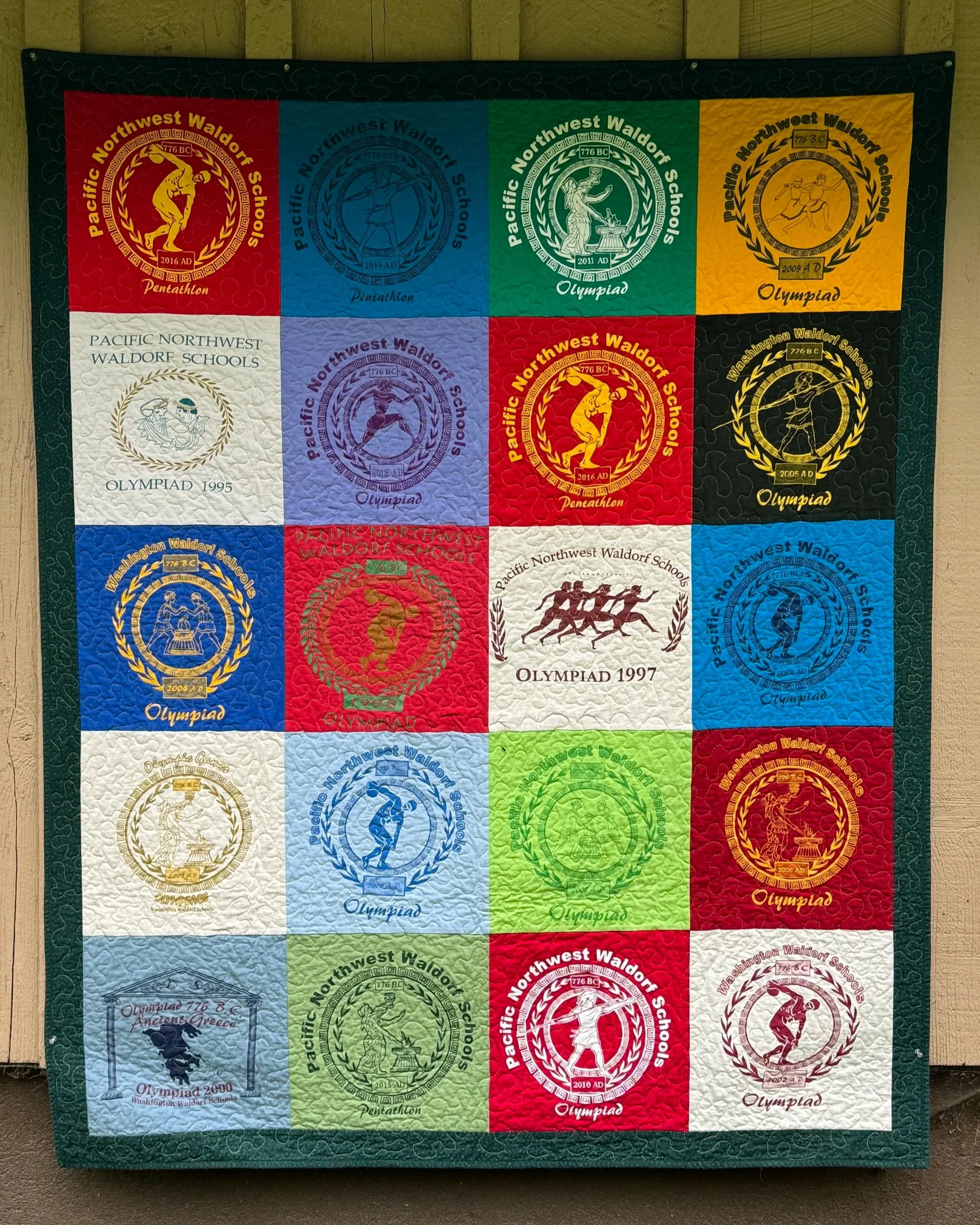
I think there must have been about 95 students at the Greek Games, from eight different Waldorf schools. Our first dinner was followed by a fireside gathering, a sort of wooden amphitheater with a crackling fire in the center. We started by singing “Glorious Apollo”, then each class presented a song/skit/poem/etc. We sang an original tune, "Come to Me Here from Crete,” based on Sappho’s poem. It was a fine rendition! All of the classes gave unique and impressive presentations. The gods were pleased.
From that point, Dionysus, that old reveling partier, took over. Classes took turns suggesting (i.e., shouting) what song should be sung next. We sang as one, clapping, stomping, the flames rising up in the vortex of our voices. It was a raucous and wonderful eternal moment. The students’ piping visages, kaleidoscopic with campfire light, will remain kindled in my heart for a long, long time. This might have been my favorite part of the Greek Games.
The next day, the Games began! There was a beginning ceremony, artfully led by one of the judges. After this ceremony, we began our morning event rotations: Discus, Greek Wrestling, Javelin, and Rest/Snack/Gaga Ball.
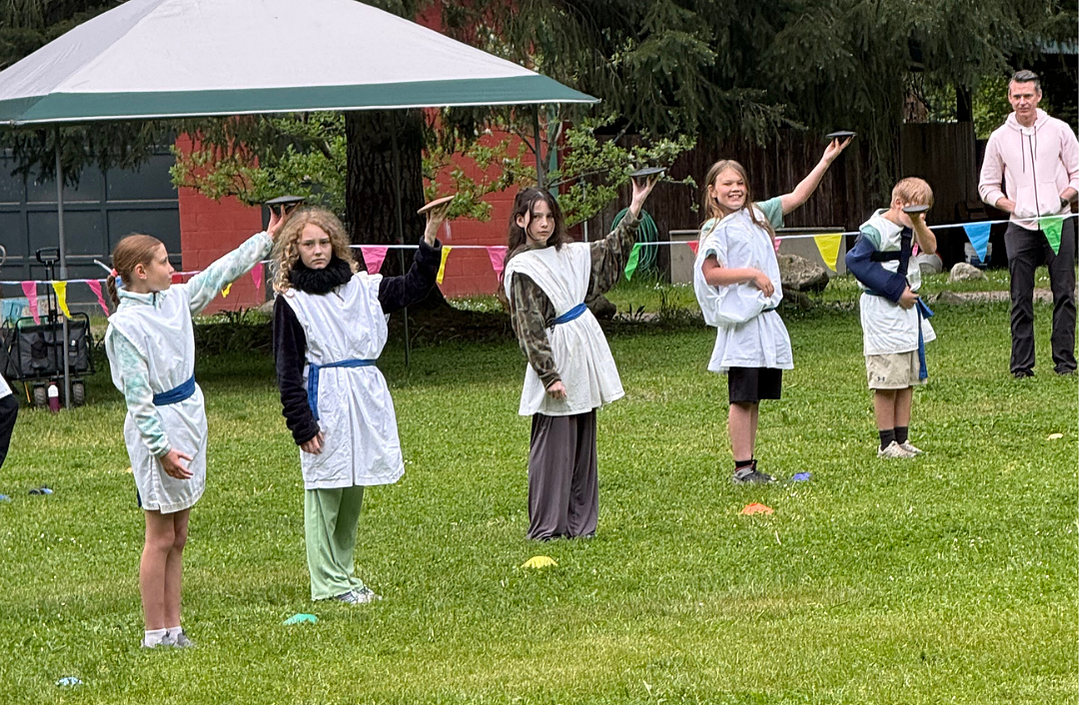
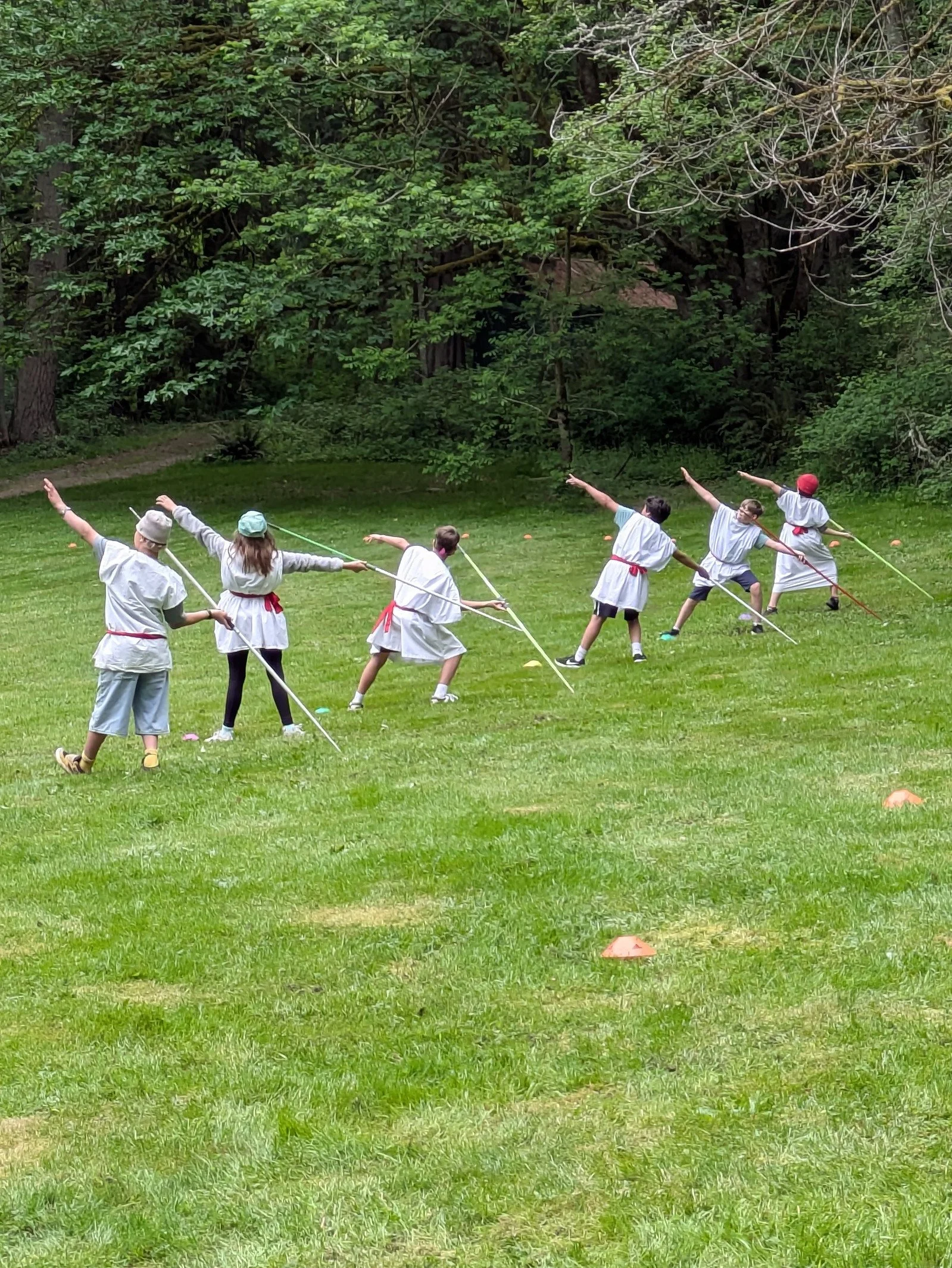
I’ll paint a miniature picture of Javelin, the event Mrs. Tabor (as one of the judges) led. The students line up on their marks, roughly six feet away from each other. They’re in a long line, near the top of a shallow hill. Mrs. Tabor explains how the event will work, how these javelins might differ from ones they’ve practiced with, and how to correct for those differences. She explains what she’s looking for in an excellent throw. The students are given multiple practice throws, these happening simultaneously. Javelins do belly-flops, javelins do front flips, javelins stick heroically into the grass. Retrieve (no running!) and try again.
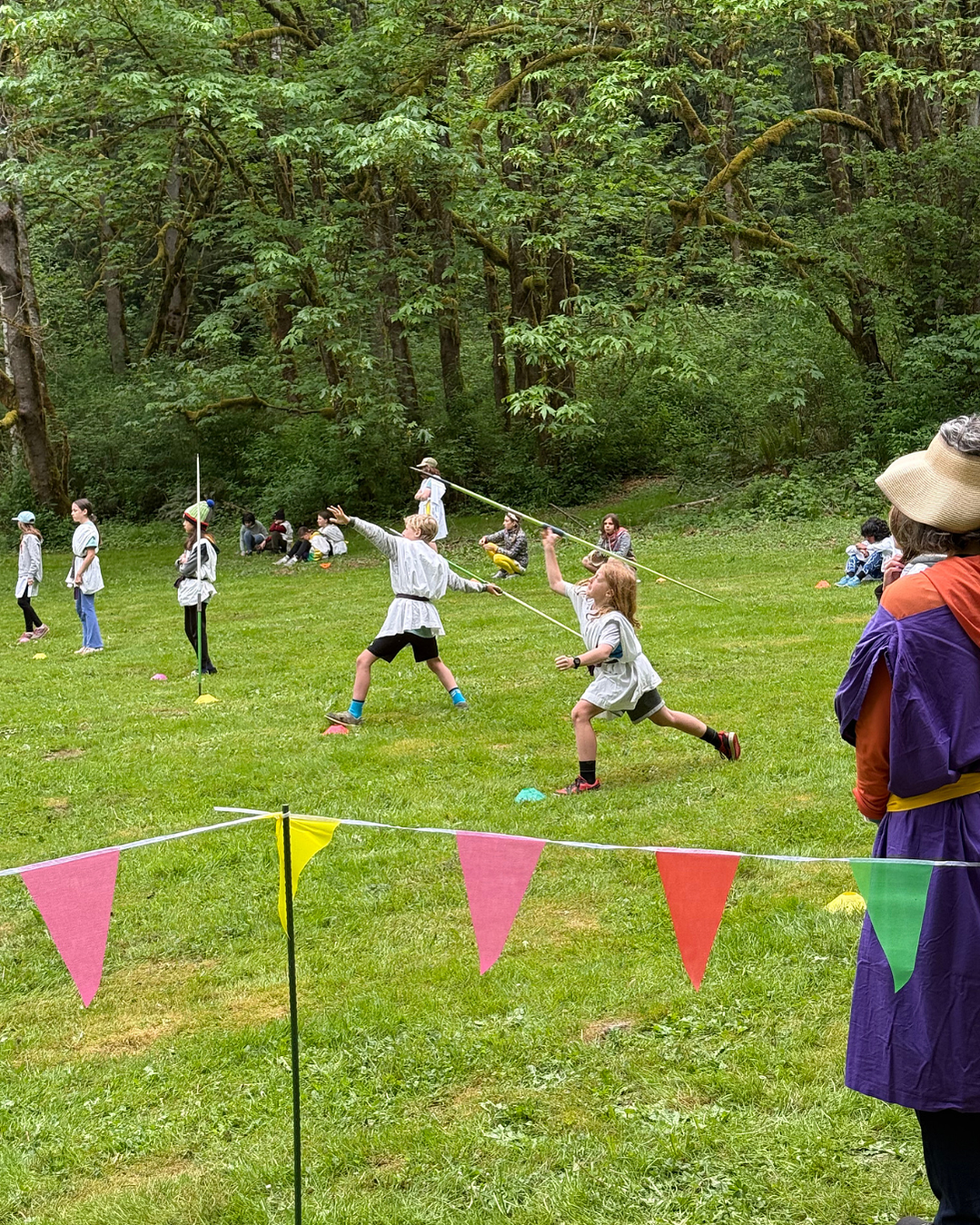
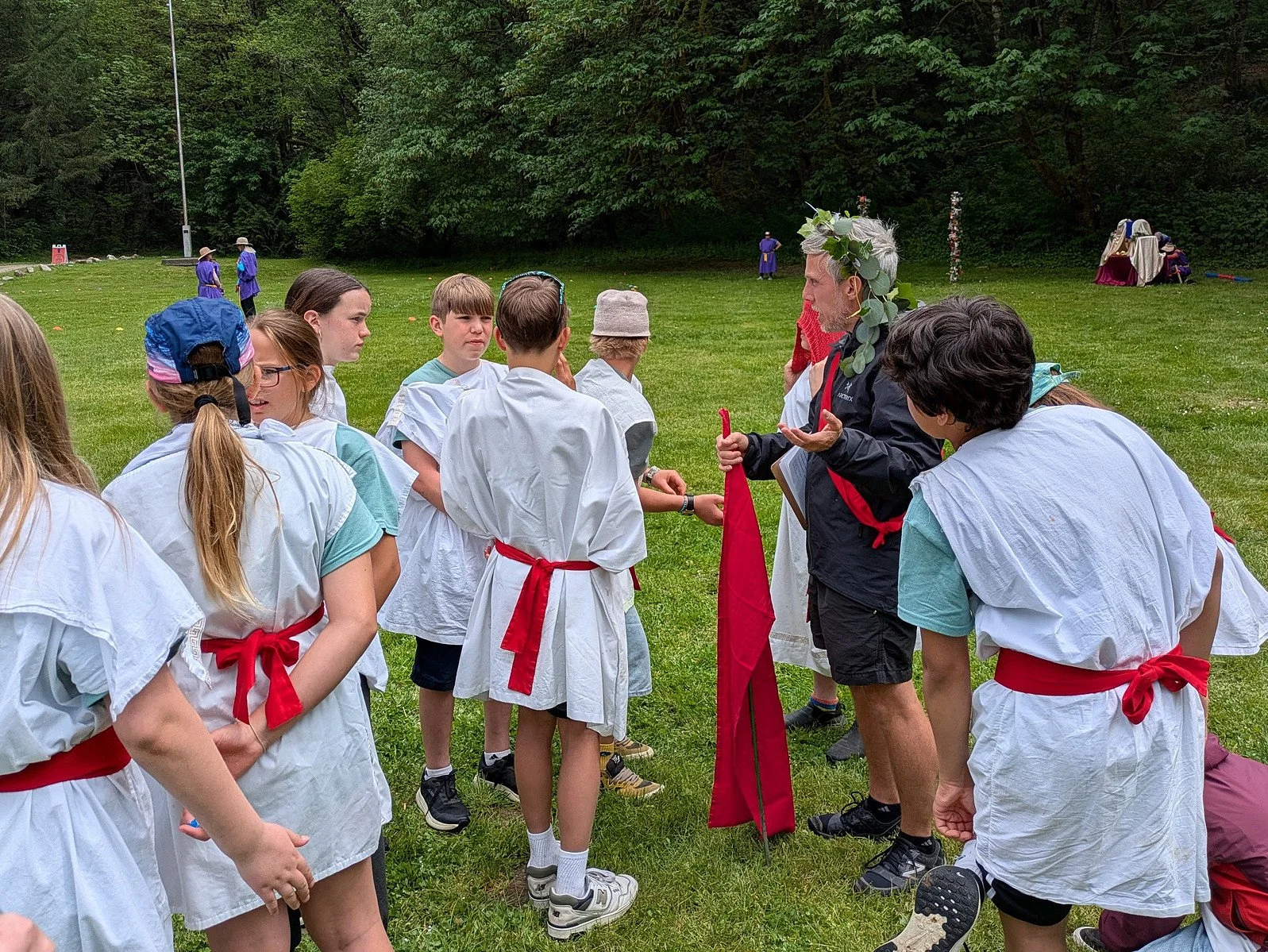
After practice, the individual throws are done. I, in my most royal tones as King of Sparta, called out a student’s name; the student grabbed the javelin, took the practiced position, and let fly the javelin. Meanwhile, I am scribbling a kind of frenzied shorthand on my clipboard. I’m looking for a few things: Beauty/Form/Grace; Athleticism/Skill/Achievement; Sportsmanship/Conduct. I try to jot down every detail I can, every sincere nod, every aesthetic movement, every courteous “Nice job, Sam.” I do this for each student. It’s going to come in handy later, during the Circle of Recognition.
The final two events were group events, and each city-state competed as a whole. The first was the long jump. The long jumps were cumulative. For instance, the first Spartan jumped. Then, the second Spartan jumped from where the first Spartan landed. Then the third and fourth, etc, up to the eleventh. Whichever city-state cumulatively jumped the farthest, won.
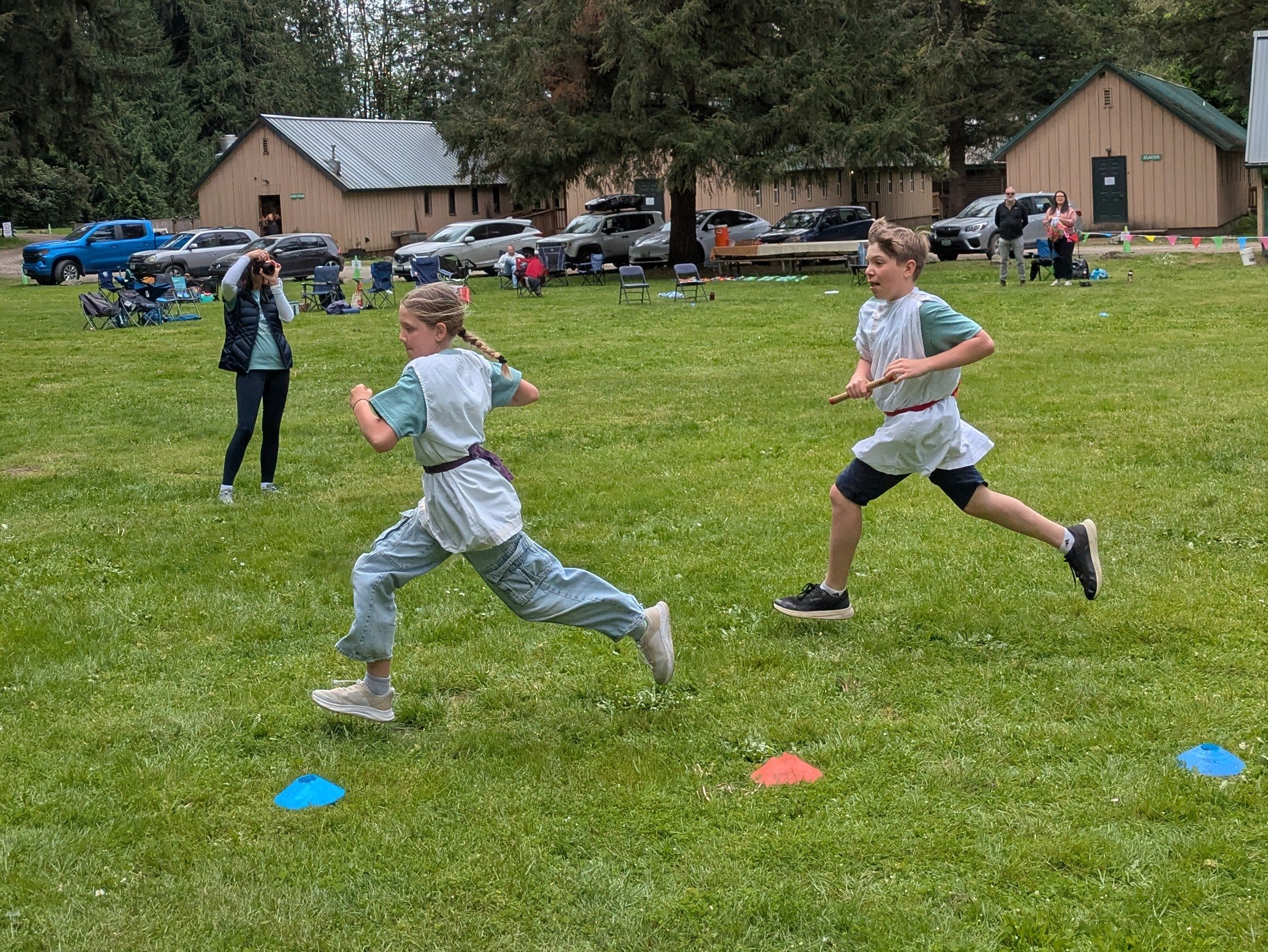
The last event was the footrace, a relay race around a circle. At the center of the circle were the city-states, lined up like the spokes of a wheel. It was a great way to end the Greek Games—very high energy, very boisterous. Everyone did great. I was glad, glad, glad that I did not have to order the winners from eighth to first, as every city-state seemed to me to finish at roughly the same time!
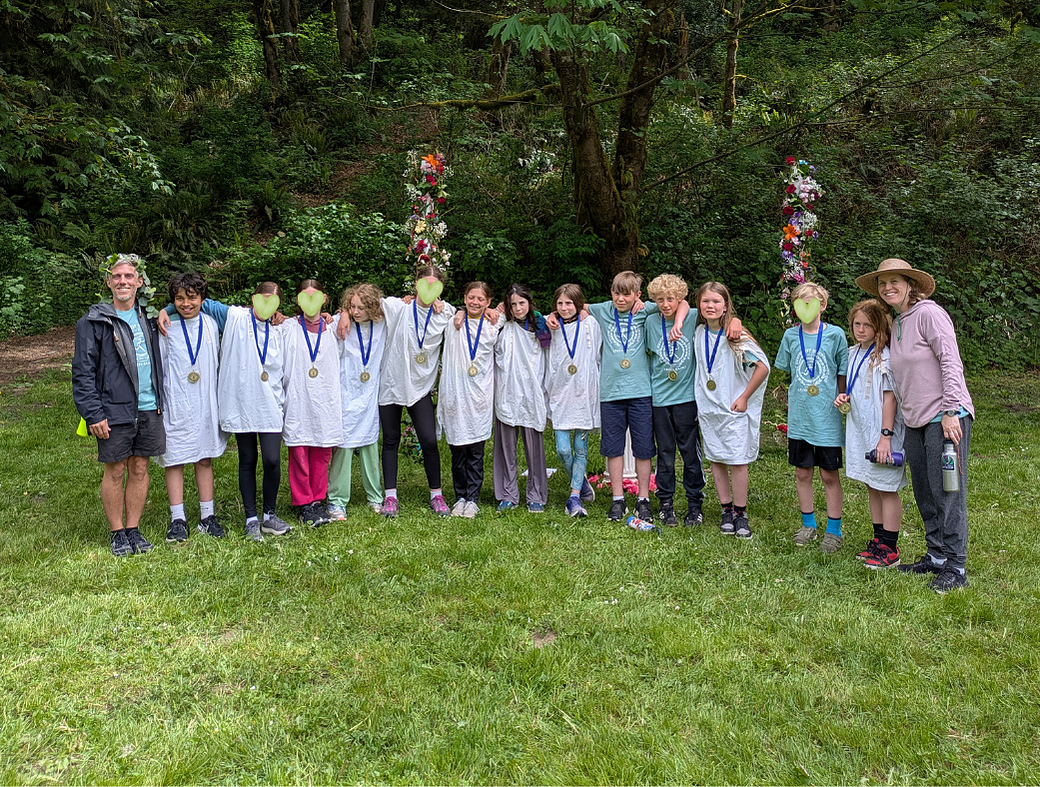
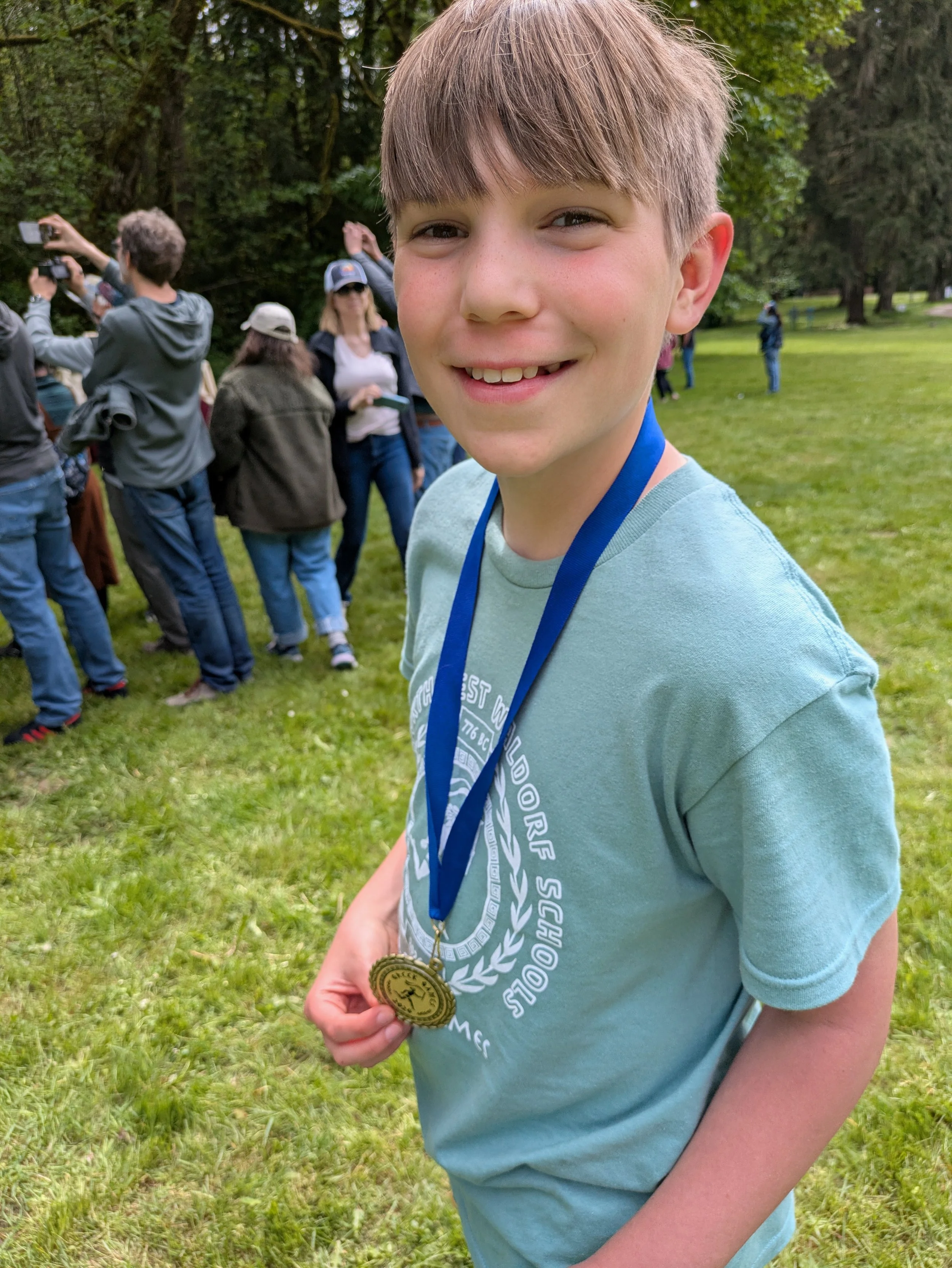
Each student then received a medal, and we convened in our city-states for one last thing: the Circle of Recognition. I don’t know how this went in other city-states, but we Spartans went from one student to the next, honoring each. I would start with my own appreciations, which spun out of my notes and somehow reified/desublimated in the needed moment. I felt that everything I said was true, heartfelt, and meaningful. Then, the other students and the chaperones were given the opportunity to honor that student. Every student received multiple comments. All in all, it was a perfect end to a perfect Greek Games.
I want to thank everyone who helped make this possible. I’ve written a lot; I’ve left out a lot. I hope that my ramblings have given an impression of just how special and magical this event is. And it happens but once in a child’s life, never to be repeated, never even to be approximated. We want that in a good education. We want that in a good life.