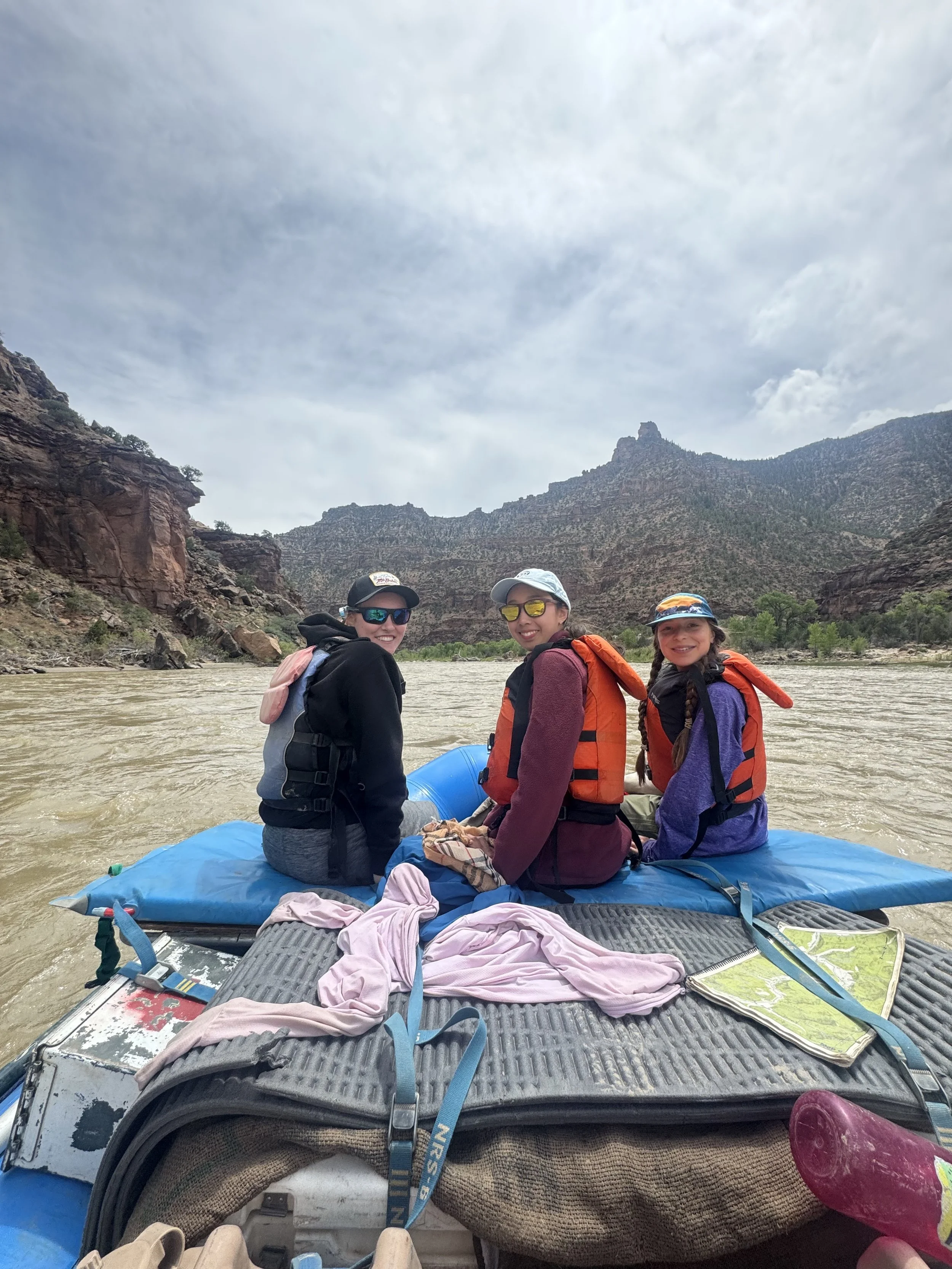
WHWS 8th Grade Rafting Trip on the Green River: A Transformative Wilderness Adventure
By Marlis Sandwith, 8th Grade Teacher
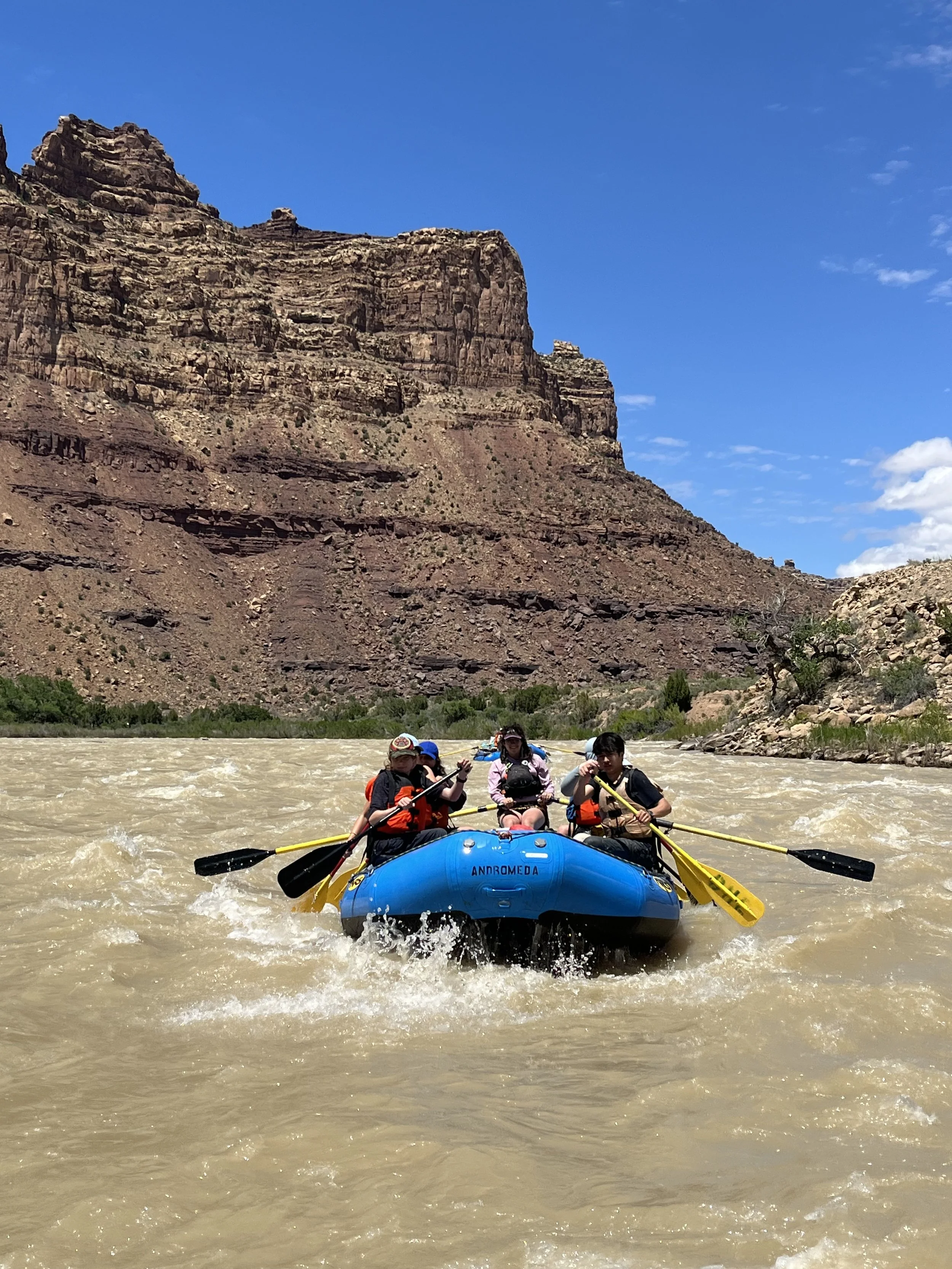
For several years now, the culminating trip for our eighth grade class has been a rafting expedition down the Green River through Desolation and Gray Canyons in Utah. This year was no exception, and once again, it was difficult to return unchanged.
Even getting to the river is no small feat. This trip represents years of preparation, commitment, and community effort. Funds come in part from activity fees that carry over from year to year, but beginning in seventh grade, the students themselves take on much of the work of fundraising. After earning their food handler permits, they begin with baked potato bowls in seventh grade and continue in eighth grade with burrito bowls, Friday bake sales, and other efforts throughout the year. They are, of course, supported by parents and the school, but one of the things I deeply value about our school is that, to every extent possible, the students do the work themselves. They serve the food, wash the dishes, make change, show up, and do it again the next week. By the time they arrive at this trip, they have truly helped build the road that carries them there.
This year, the class finished three nights of eighth grade project presentations and then, mere hours later, arrived at Fred Meyer at 2:30 in the morning to head to Sea-Tac Airport. From there we flew to Salt Lake City, where we were met by a bus and driven several hours to meet our Deer Hill guides. Deer Hill Expeditions, based in Mancos, Colorado, has once again proven to be an extraordinary partner for this journey.
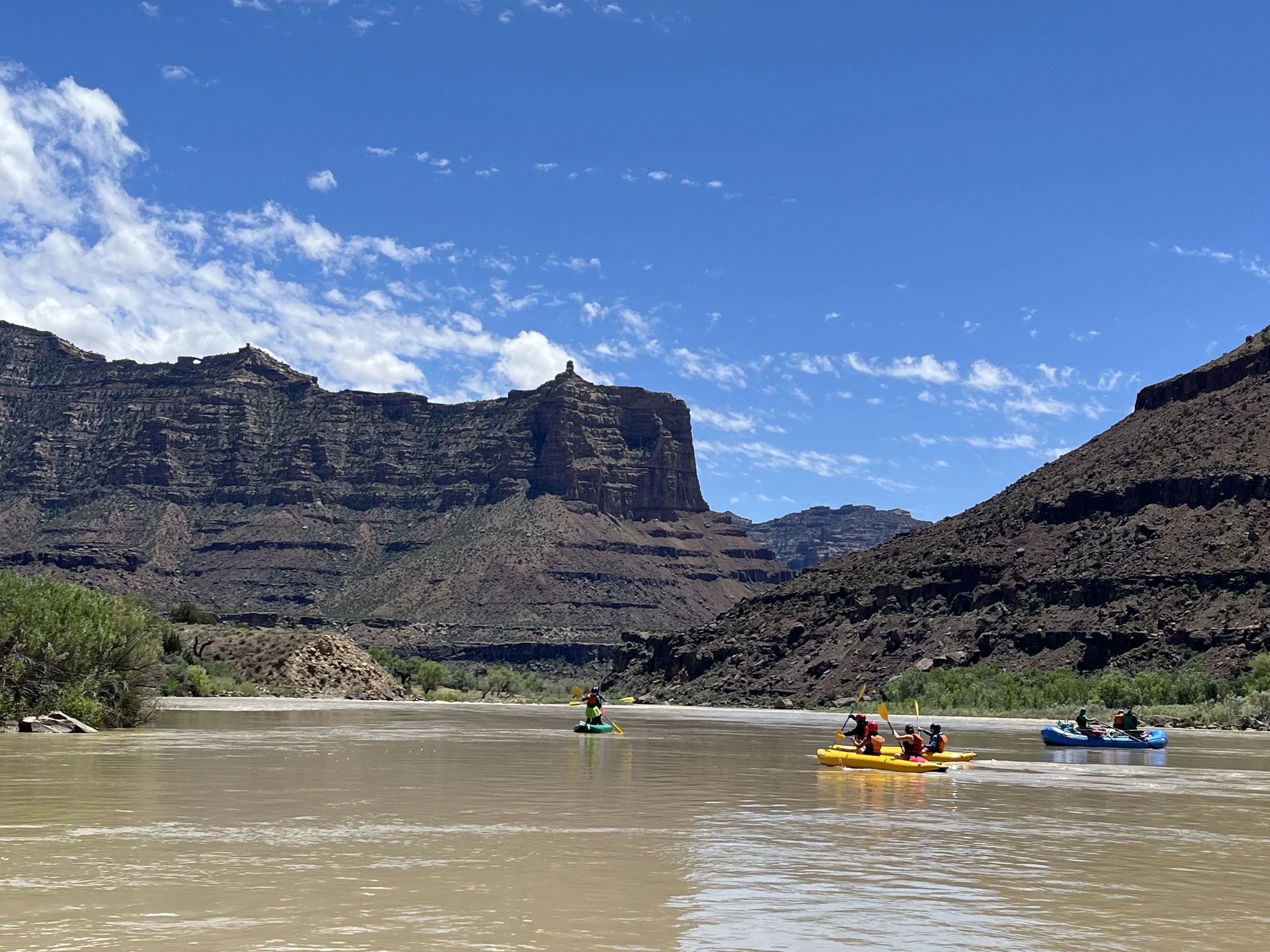
The Green River itself is a remarkable teacher. Flowing through eastern Utah, it cuts through deep desert canyons, carrying with it stories of geology, human history, and the more-than-human world. The canyon walls reveal layers of ancient stone; the river bends through sagebrush, cottonwoods, willow, juniper, sand, cliff, and sky. Along the way we encountered petroglyphs, an abandoned cowboy ranch, rapids formed by rockfall and river movement, and evidence everywhere of life adapting to this dry and beautiful landscape.
Each day, we spent around six hours on the river, stopping for lunch, hikes, historic sites, and the occasional scouting of rapids. Students traveled in several kinds of boats: the big, stable gear raft, the paddle raft where students worked together to move downriver, and “duckies,” small inflatable kayak-like boats that carried one or two students at a time. The rapids were mostly Class II and III, with one Class IV, and they offered just the right mixture of challenge, excitement, and shrieking.
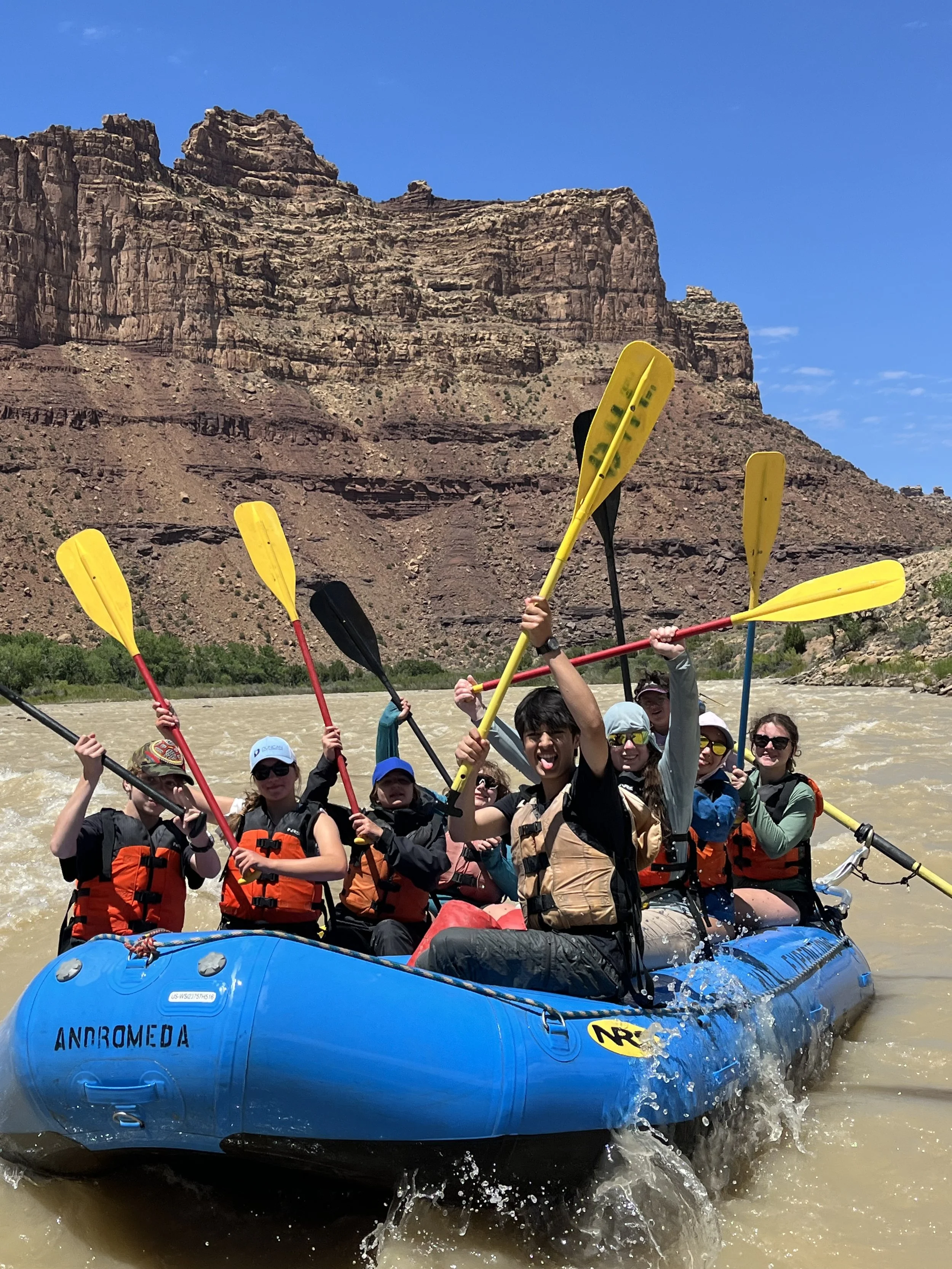
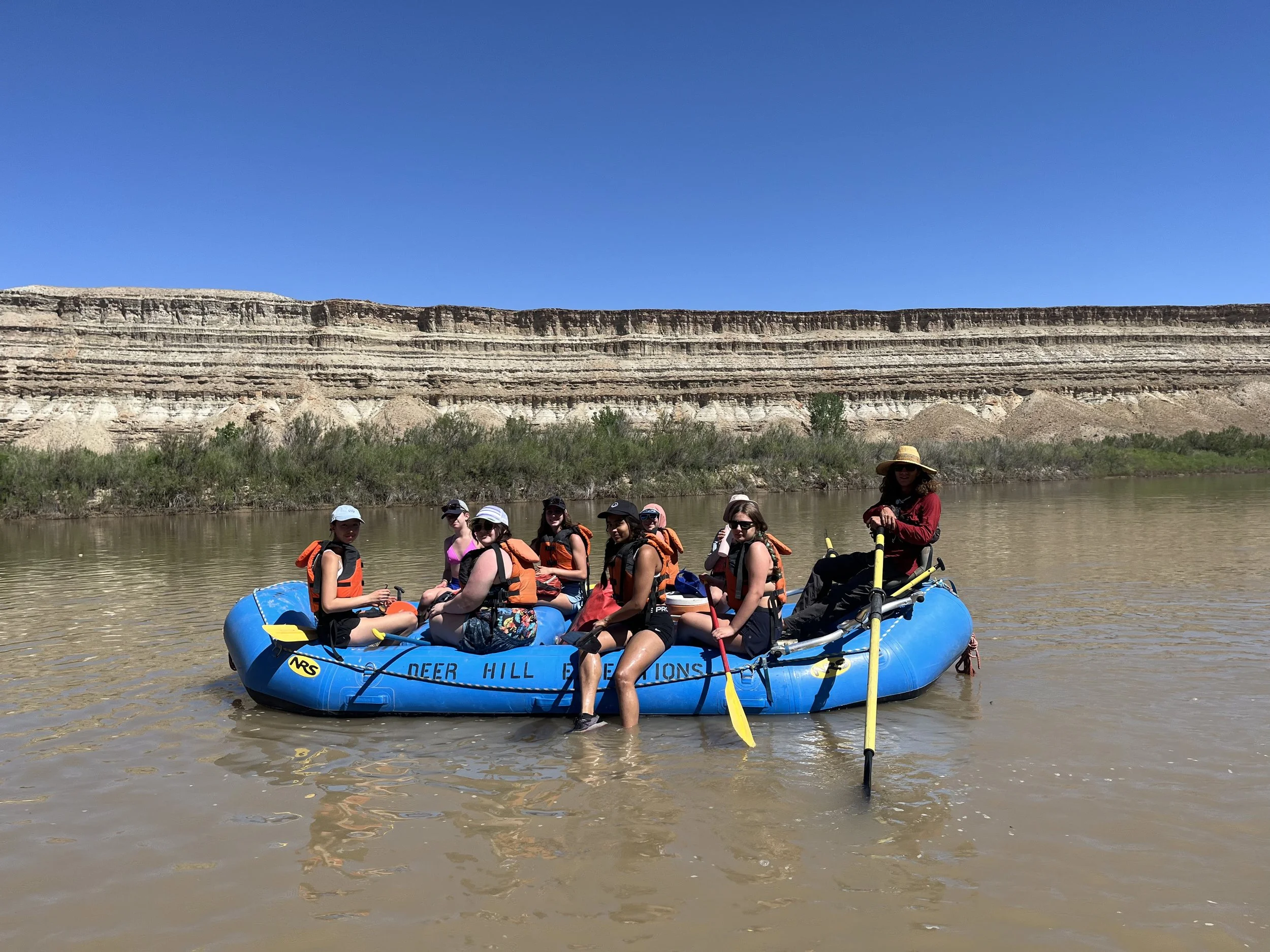
The weather gave us a bit of everything — sometimes in the same day, sometimes in the same hour. We experienced heat in the 90s and cold down near the 30s. When the weather turned difficult, our guides were skillful at keeping us moving, warm, engaged, and in good spirits.
At first, the students were learning the rhythm of river life: how to pack and unpack rafts, how to set up camp, how to form fire lines, how to care for gear, how to cook meals, how to manage the groover (our bathroom system), how to work within chore groups, and how to help make daily life possible. It took a few days to settle into the form, but once we did, there was a deep security in the rhythm: wake, pack, raft, stop, cook, clean, circle, sleep under the stars.
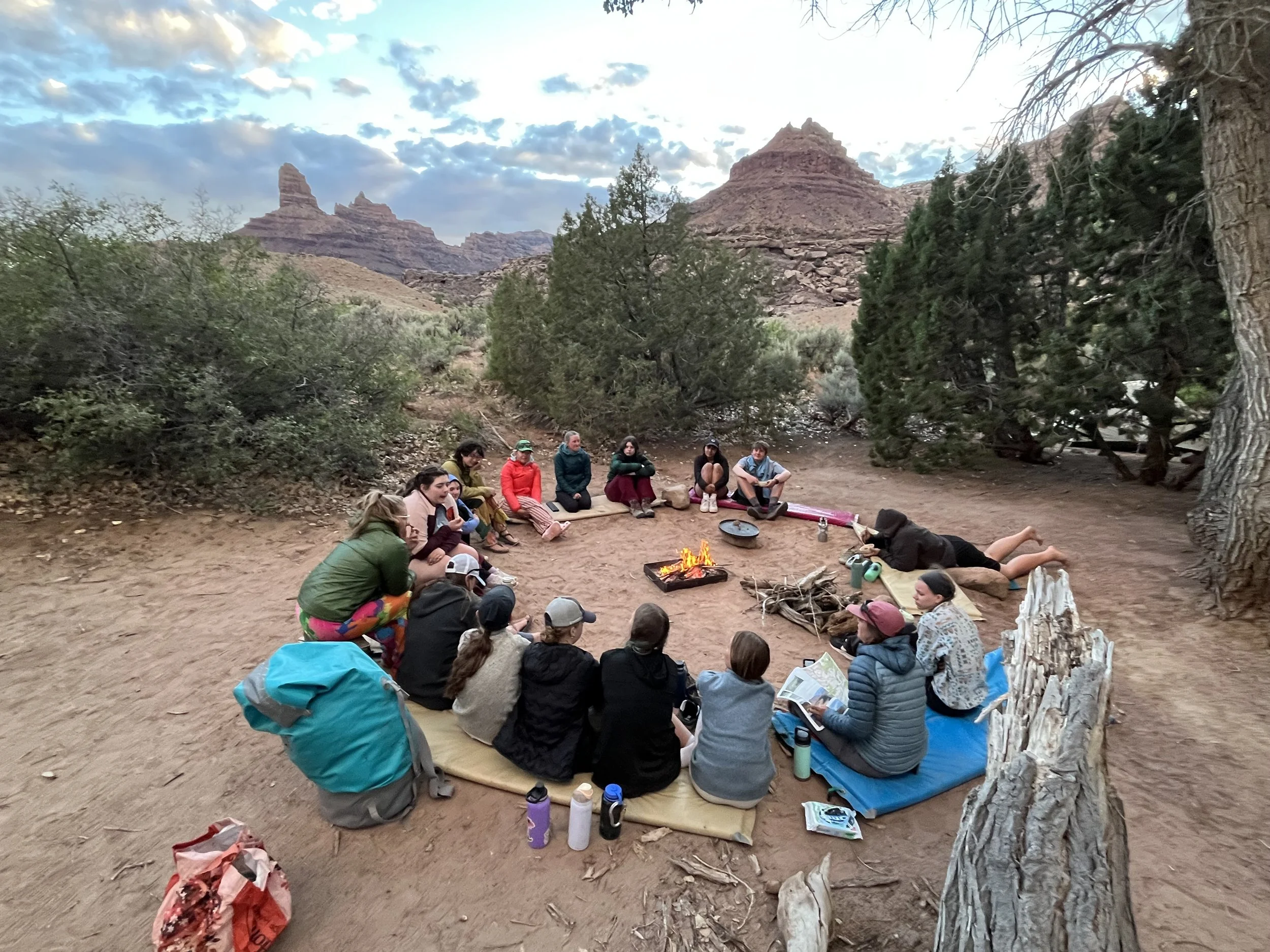
Each evening we gathered in circle for games, mindfulness, reflection, and prompts that invited the students to think a little more deeply about themselves, one another, and the experience we were sharing. True to form, this class sang constantly — on the river and off. They made up dances and songs, played guitar and cards, read books, braided one another’s hair, climbed rocks, laughed, skipped, yelled, shrieked, and moved through the landscape with a kind of freedom that is increasingly rare for young people to experience.
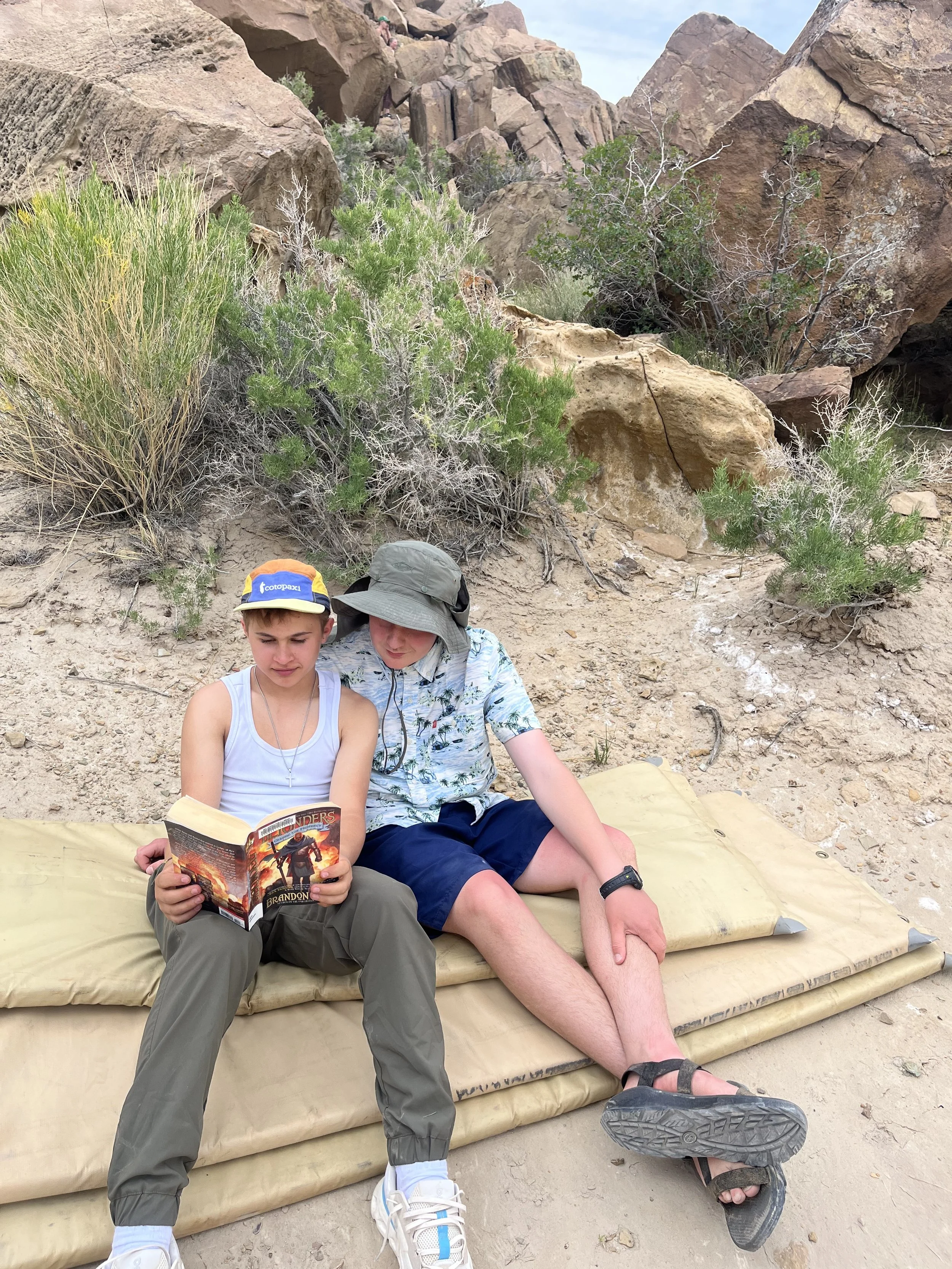
One of the great gifts of this trip is that students are device-free. In a world where screens so often mediate experience, it was profoundly moving to see fourteen- and fifteen-year-olds fully present in the wild. They noticed things. They smelled sage after rain. They watched the river. They studied cryptobiotic soil. They wove willow baskets from willow harvested near the riverbanks. They saw wild mustangs, bighorn sheep, great blue herons, cows, lizards, and one unforgettable snake eating a lizard. They learned why rapids form. They cheered each other through challenges. They stepped outside habitual friendships and found new ways of connecting.
As the teacher, I had the unusual privilege of stepping back. The guides held the structure of the trip so beautifully that I was not always in my usual teacher-leader role. Instead, I got to watch. I saw students become freer in themselves. I saw sides of them that do not always appear in the classroom. I saw courage, tenderness, humor, resilience, silliness, care, and joy. I saw students who had been reluctant at the beginning become reluctant to leave when we finally reached the take-out.
One of the most meaningful parts of the trip was the solo experience, during which each student wrote a letter to the class. On our final night, we read those letters aloud in our closing circle. It was a beautiful and fitting way to mark what had happened among us: not just a trip, but a shared experience that each person had helped create.
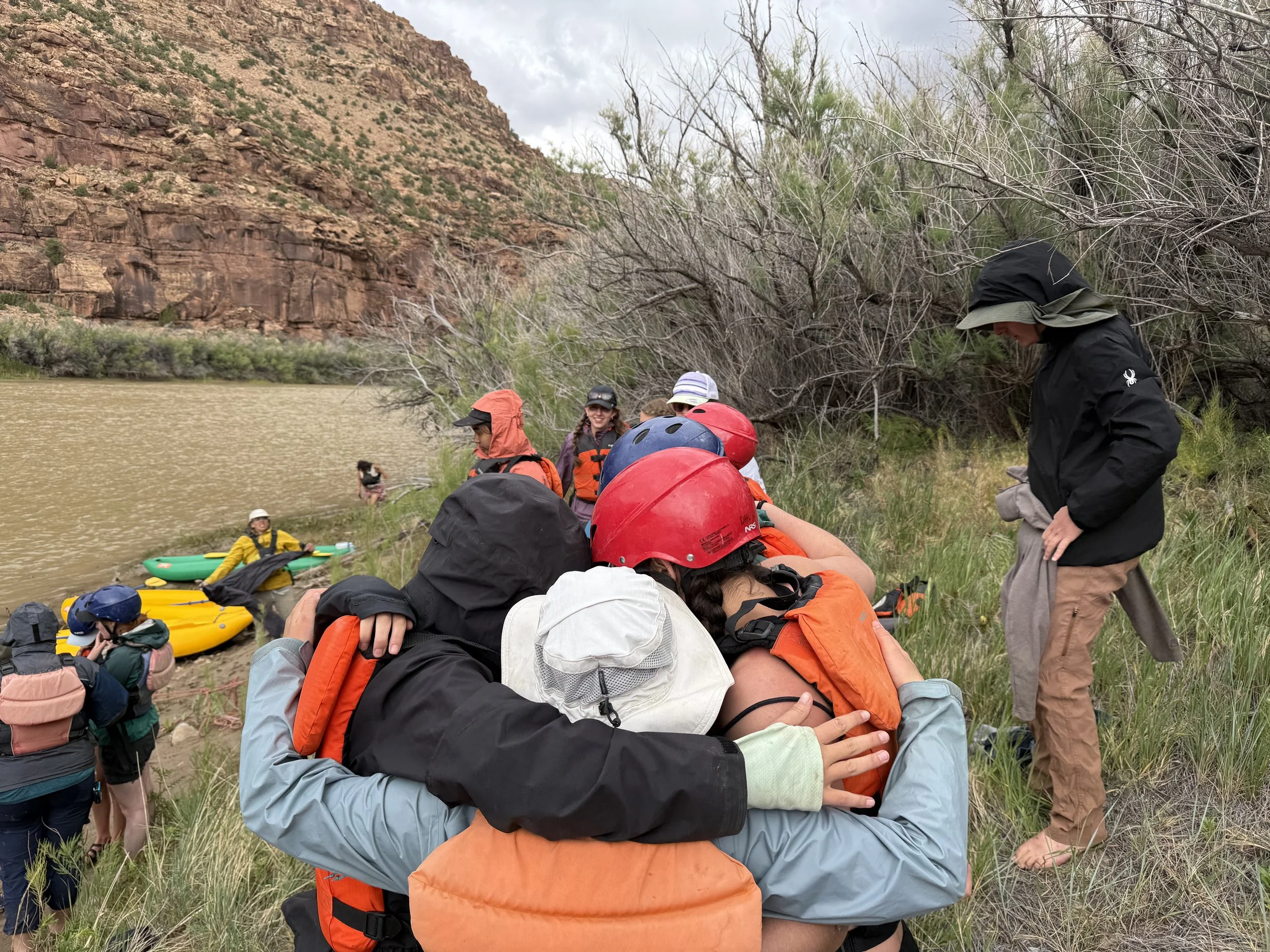
On the final morning, as we left our last campsite, we spent time in silence for the first twenty minutes down the river. By then, time had begun to feel different. The days had flowed together, shaped by the river, the weather, the canyon, and the daily work of living together. When we eventually saw the first car again along the river, it felt almost strange — a reminder that the world we had stepped away from was waiting for us.
I found myself full of gratitude: for the beauty of the earth, for the vastness and timelessness of the canyon, for our guides, for Ms. Bennett’s steady presence as our second chaperone, and for these students who are so close now to flying onward. This trip is unlike a tour or a city visit. It asks something of the students. It gives them real responsibility. It invites them into freedom, work, wonder, discomfort, laughter, cooperation, and awe. They do not simply attend the trip; they help co-create it.
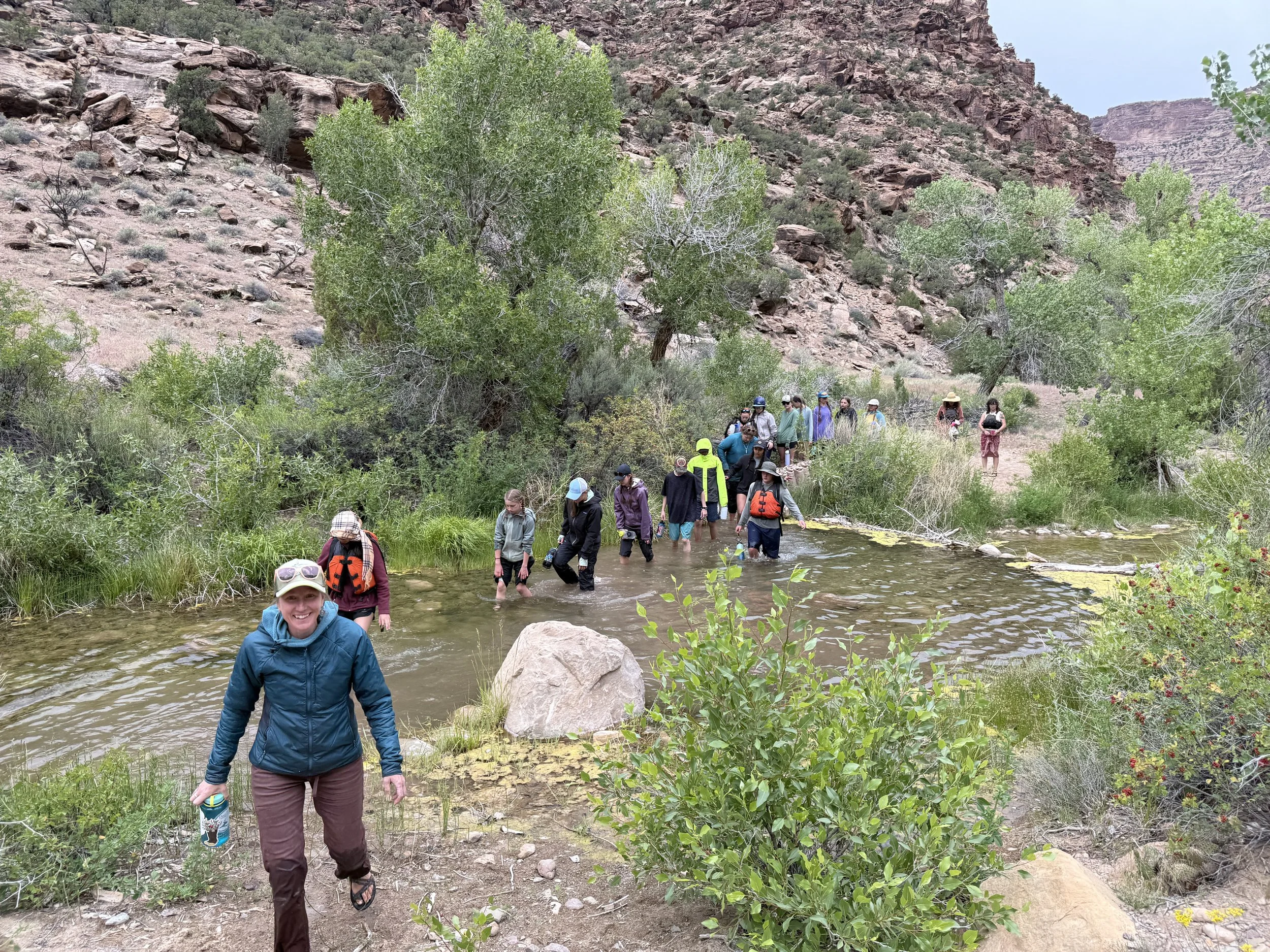
As we returned from the river, one set of words stayed with me especially deeply. One evening, beneath the stars, one of our guides read us the following words, often attributed to the Elders of Oraibi, Arizona, Hopi Nation. After days of learning to let go of the shore, to trust the current, to see who was there beside us, and to celebrate the shared work of our journey, they felt especially fitting:
“There is a river flowing now very fast…
Know the river has its destination.
The elders say we must let go of the shore, push off toward the middle of the river, keep our eyes open, and our heads above the water.
See who is there with you and celebrate…
The time of the lonely wolf is over.
Gather yourselves…
All that we do now must be done in a sacred manner and in celebration.
We are the ones we have been waiting for.”
And so we returned dusty, tired, and full-hearted. Thank you to every parent, family member, student, colleague, burrito bowl customer, bake sale supporter, driver, dishwasher, and community member who helped make this possible. This trip is a monumental effort, and it is also a profound gift.
Needless to say, we are back — and our hearts are full.